




Build and design your catering website

Drag and drop editor
Wix’s flexible website builder lets you add and arrange menus, packages, event galleries and inquiry forms without coding. Create dedicated pages for different catering services, highlight seasonal offerings and update your content whenever you need to. A .rest domain reads as hospitality in a shorter address.
Design features
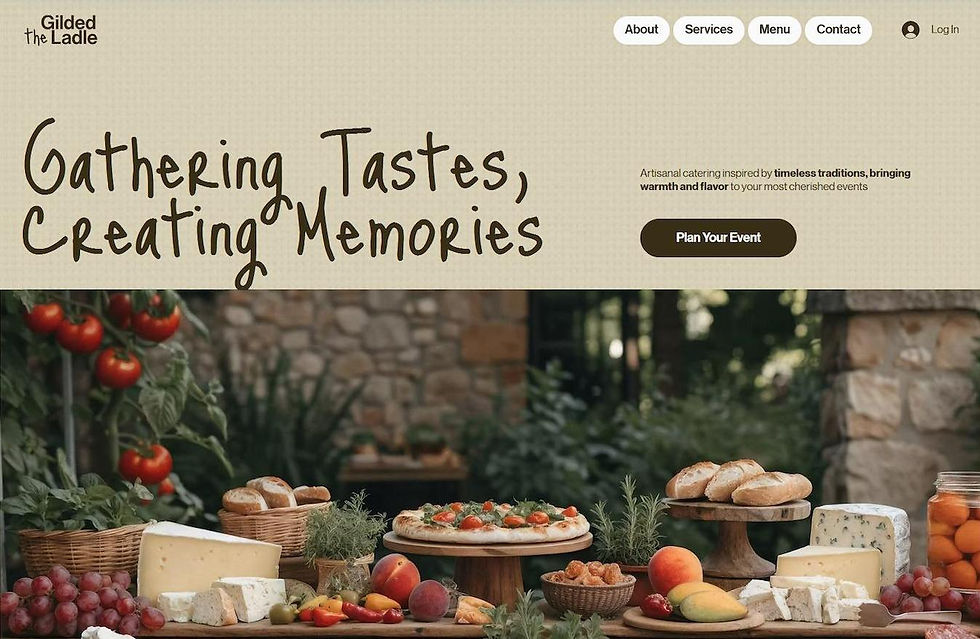
Use food photography, galleries, video and scroll effects to show your dishes, packages and past events. With flexible website design, you can create menu pages that are easy to browse and layouts that put your catering style front and center.
AI creation tools
Built-in AI tools can generate dish descriptions, package copy and page sections in seconds. Create content for dietary information, FAQs, testimonials or sourcing details and make changes directly in the editor.
Catering business tools
Keep event details and client communication organized in one place, from the first question to the final payment. Add live chat for quick menu questions, accept online payments and use business tools to keep track of orders, customer details and upcoming events.
Wix is trusted by over 300M users
Content ideas for your catering website

About the caterer
Introduce your chefs, specialty cuisine and sourcing approach, plus relevant kitchen or food-service credentials, so clients know who will be preparing their food.

Event gallery
Show real weddings, corporate lunches and private parties with photos of the food, tables and event setup to help clients picture the experience.

Menus and packages
Group packages by event type with per-person pricing, dietary options and clear inclusions so clients can compare what fits their event.

Quote request form
Collect the details that shape a catering quote, such as guest count, date, venue, service style and dietary needs, so you can respond with a more accurate estimate.


Catering website examples FAQ
What are catering website examples and why should I look at them?
Catering website examples are real sites that show how menus, packages, event galleries and inquiry flows can be organized. Looking at several before you build helps you decide what information clients need, how to structure your pages and which features are worth adding.
Pay attention to how each site handles package details, pricing, dietary information, service areas and quote requests. You can also use examples to create a simple page plan before you start, then estimate your budget based on the features you actually need.
What should a good catering website include?
A good catering website should make three things clear quickly: what you serve, what types of events you cater and how clients can get a quote. Include menus or packages, pricing guidance, dietary and allergen information, service areas, an event gallery and an inquiry form that asks for the date, venue and guest count.
Add testimonials, photos of your team and relevant food-service credentials to help clients assess your experience. If you cater weddings or corporate events, separate pages for those services can also give clients more relevant information without making the main menu page too long.
How do I show my catering menus and packages online?
Group packages around the way clients search for catering, such as weddings, corporate events, drinks receptions or private dinners. Give each package a clear description, what is included, per-person pricing or a useful pricing guide and any minimum order or guest requirements.
Make dietary options and allergens easy to find rather than hiding them in a separate page. With a website builder, you can also update seasonal menus and package details without waiting on a developer.
How does a catering website turn visitors into bookings?
Make the next step obvious at every point where someone might be ready to inquire. Add a quote button to the main navigation, place inquiry links near package information and keep the form focused on details you actually need to prepare a quote.
Ask for information such as the event date, location, guest count, event type and service requirements. A confirmation message can let the client know their request was received and what happens next.
Do I need a website if most of my catering work comes from referrals?
A website gives referrals somewhere to verify your business before they contact you. Use it to show your menus, packages, past events, service area, pricing guidance and the type of events you cater.
It can also answer common questions before they become inquiries. Clear information about minimum spend, lead times, travel fees, dietary options and booking requirements can help clients decide if your service is a fit.
How much does a catering website cost?
The cost depends on the number of pages, how much content you create yourself and the features you add. A simple site with menus, an event gallery and an inquiry form requires less work than one with online payments, booking features or a large collection of custom pages.
Can a private chef or food truck use the same kind of website?
Yes. The basic structure works for both, but the content should match how each business gets booked.
A food truck can focus on locations, menus, event bookings and availability. A private chef can put more emphasis on tasting menus, in-home dining, service areas and the booking process.
What photos should I put on a catering website?
Prioritize photos from real events you have catered. Show the food alongside the setting, including plated meals, buffet displays, grazing tables, table setups and your team serving guests.
Use a mix of wide event photos and close-ups of individual dishes. Compress large image files before uploading them so your galleries load quickly, especially for people browsing on their phones.
How do I make my catering website easy to find on Google?
Create pages around the services and locations you actually target. For example, a caterer serving corporate events in Chicago could have a corporate catering page that clearly mentions the service and location rather than relying on the homepage to cover everything.
Use specific page titles, headings and copy that describe your catering services, locations and event types. Keep your business name, address, phone number and service area consistent across your website and other business listings. A clean website design also makes it easier for visitors to navigate those pages on mobile.