Updated: Aug 17
Build your website in minutes, try Wix for free today →

Many people searching for Wix alternatives are simply looking for the website builder that best matches their specific needs, goals and workflow preferences. Doing your research is just good due diligence.
This guide covers the major platforms most often researched as Wix alternatives, explaining how each one works, who it’s built for and the types of features it includes. The goal is to provide a clear, factual overview of the website builder landscape so you can evaluate each option based on your technical requirements, business needs and future growth plans.
In the sections below, we’ll review established platforms commonly considered as Wix alternatives.
TL;DR: Wix alternatives
When researching Wix alternatives, most users are comparing website platforms based on workflows, technical setup and available features rather than searching for a single “best” option. Different platforms support different use cases, from open-source site management and code-friendly visual builders to hosted platforms with built-in business tools.
The platforms below are among the most commonly explored alternatives to Wix, with each offering a distinct approach to site creation, website hosting, AI-assisted setup and long-term scalability.
So, whether you’re learning how to make a website from scratch, launching an online store or using an AI website builder, the right choice depends on how closely the platform aligns with your project goals and technical preferences.
At a glance, common use cases include:
WordPress/Elementor: open-source flexibility and plugin ecosystems
Webflow/Duda: advanced design and agency workflows
Shopify: product-first eCommerce operations
Squarespace/GoDaddy: fast setup with hosted infrastructure
Platform | Best for | Starting price* |
WordPress | CMS + publishing | Free/~$4/mo |
Hostinger | Budget AI builder | ~$3.99/mo |
Webflow | Designers & devs | Free/~$14/mo |
Squarespace | Design-first sites | Free/~$16/mo |
Shopify | eCommerce | Free trial/~$29/mo |
Weebly | Beginner websites | Free/~$10/mo |
Elementor | WordPress visual building | ~$5/mo |
Duda | Agencies | Free trial/~$19/mo |
GoDaddy | Small business | Free/~$9.99/mo |
*Pricing varies by billing cycle and region. Always verify current plans before publishing.

Building a website for your business, passion project or side hustle should feel simple and exciting. Wix generates a personalized starting point with AI. You can customize every detail with intuitive drag-and-drop tools, while Wix handles the tricky parts to make building your site simple. That way, you can focus on what matters most: bringing your ideas to life. Ready to get started? Create your website today.
Why people look for Wix alternatives
Searching for a different platform doesn't mean something is wrong with the one you have; it usually means you have a specific way you like to work.
“Researching the best fit is a natural part of building a website,” says Rebecca Tomasis, organic growth content lead at Wix. “Most people are looking for the right balance between ease of use, flexibility and the ability to grow over time. What matters most is choosing a platform that supports how you work today, while giving you room to expand as your needs evolve.”
Here are a few common reasons people shop around:
Open-source or self-hosted preferences: Some creators want full technical control. They want to access the site code, manage their own hosting, or modify the software deeply. This is about wanting a hands-on technical workflow rather than using a hosted platform.
Different design workflows: Developers and professional designers often have specific preferences. Some prefer platforms built around strict grid systems, while others want code-level styling or website templates to start from scratch. It’s all about finding a tool that matches your creative process.
Team skill sets: If a team is already fluent in a specific programming language or tech stack, they might look for a platform that speaks that same language.
Curiosity and due diligence: Many people just want to see what’s out there before committing. That isn’t dissatisfaction; it’s just being a responsible business owner.
9 Wix alternatives
While many people start their search with popular builders, it’s always smart to explore the landscape to see what tools align best with your specific needs. This section breaks down well-known platforms, detailing what they offer and who they serve best.
Our goal is to provide a clear, factual overview so you can make an informed choice based on your project goals, technical comfort level and budget.
Below is a list of the platforms covered in this section:
01. WordPress
WordPress is an open-source content management system (CMS) widely used for blogs and custom web projects. It can be self-hosted or used through hosted providers, and is known for its extensive plugin ecosystem and theme-based customization.
WordPress allows a high level of control over website structure and functionality, including access to code, hosting configuration and advanced integrations. It’s commonly used by developers, publishers and teams that require flexibility and customization.
Pricing: Free plan available. Paid plans start at $4/month (billed annually). Month-to-month payment plans are also available.
For a broader view of how it compares in real workflows, see Wix Studio vs WordPress or explore WordPress alternatives.
02. Hostinger
Hostinger is a web hosting provider that also offers a website builder with drag-and-drop editor and AI-assisted site creation tools. It combines hosting, domain management and site building in one platform, with templates designed for a variety of business types.
It’s a strong fit for small businesses, beginners and solo entrepreneurs looking for a straightforward setup.
Pricing: Paid plans start at $3.99/month (billed annually). Month-to-month payment plans are also available.
Compare: Wix vs Hostinger →
03. Webflow
Webflow is a visual website builder that combines design tools with the ability to work in a structured environment. It is often used by designers and marketing teams who want detailed control and design flexibility with some code-level customization.
Pricing: Free to start. Paid plans start at $14/month (billed annually). Month-to-month payment plans are also available.
Learn more:
04. Squarespace
Squarespace provides a template-driven website builder designed for visually polished sites. Users can customize templates via a drag-and-drop editor, making setup simple for creators who prioritize aesthetics.
Pricing: Free plan available. Paid plans start at $16/month (billed annually). Month-to-month payment plans are also available.
Learn more:
05. Shopify
Shopify is an eCommerce platform designed for selling products online, with integrated payment processing, inventory management and shipping tools.
It’s ideal for retailers, entrepreneurs and businesses focused on eCommerce.
Pricing: Free trial. Plans start at $29/month (billed annually). Month-to-month payment plans are also available.
Learn more:
06. Weebly
Weebly is a website builder that offers a simple drag-and-drop interface designed for ease of use and quick setup. It provides basic tools for building websites and small online stores without requiring technical experience.
Pricing: Free plan available. Paid plans start at $10/month (billed annually). Month-to-month payment plans are also available.
Compare: Wix vs Weebly →
07. Elementor
Elementor is not a standalone platform but a page builder plugin for WordPress. It overrides the standard WordPress editor with a visual drag-and-drop interface, allowing users to design their WordPress sites more intuitively. To use it, you must first have a WordPress installation and hosting.
Elementor is for WordPress users who want more design control than their theme allows but don’t want to code. It’s popular among freelancers and marketers who build sites on WordPress but prefer a visual editing experience.
Pricing: Plans start at $5/month (billed annually). Month-to-month payment plans are also available.
For a deeper breakdown of design workflows, see Wix Studio vs Elementor, or explore Elementor alternatives for more context.
08. Duda
Duda is a website builder tailored specifically for agencies and SaaS platforms. It offers built-in AI features that focus on workflow efficiency, allowing agencies to build sites for clients quickly. Duda isn’t typically marketed directly to individual DIY users.
Duda supports team-based workflows with features such as client permissions, reusable site sections and collaboration tools.
Pricing: Free trial available. Paid plans start at $19/month (billed annually). Month-to-month payment plans are also available.
For more context on how agency-focused workflows compare, see Wix Studio vs Duda or explore Duda alternatives .
09. GoDaddy
GoDaddy is best known as a domain registrar, but it also offers a website builder. Users can choose between manual creation or an AI-driven setup that walks users through a few questions to generate a ready-made site layout.
It’s typically used for getting a basic website online quickly with minimal setup. The platform also includes built-in tools for domains, hosting and simple business features like email and marketing.
Pricing: Start for free. Paid plans start at $9.99/month (billed annually). Month-to-month payment plans are also available.
Learn more:
Feature comparison table: Wix alternatives
Here’s a quick overview of popular website platforms that are commonly researched as Wix alternatives:
Platform | AI features | Built-in business tools | eCommerce platform | Templates |
WordPress | Plugin-dependent AI tools | Depends on plugins and integrations | Yes, via plugins | Thousands of themes |
Hostinger | AI website builder tools | Marketing and SEO tools | Yes | 300+ templates |
Webflow | AI features | CMS and marketing integrations | Yes | HTML templates |
Squarespace | AI site creation | SEO tools | Yes | 150+ templates |
Shopify | AI tools for commerce | Marketing and SEO tools | Yes | 800+ themes |
Weebly | No built-in AI capabilities | Integrated marketing tools | Yes | 50+ templates |
Elementor | AI tools for site planning | Marketing tools | Yes (via WooCommerce) | WordPress theme dependent |
Duda | Build with AI | Client management, collaboration tools | Yes | Library of modern templates |
GoDaddy | AI-assisted website builder | SEO, social media and email marketing | Yes | 100+ templates |
Where Wix fits in the overall landscape

Wix is a drag-and-drop website builder designed as an all-in-one platform, combining website creation, hosting, AI design tools and built-in business features in a single environment.
Rather than requiring users to connect multiple services, Wix brings design, content management, marketing and site infrastructure together in one place.
From a workflow perspective, Wix is known for its visual drag-and-drop website builder, allowing users to customize layouts without needing to code. Users can start from professionally designed templates or use Wix Harmony, Wix’s hybrid AI website building experience that generates a personalized site structure based on user input, and then allows full visual customization afterward.
Wix Harmony’s combination of AI-generated setup and hands-on editing gives users flexibility to move quickly at the start while still having control over the final design. Through Wix’s AI agent Aria, users can generate site structure, content suggestions and design direction based on their goals, then refine every detail using the visual editor.

Wix also includes a wide range of built-in tools that support different types of websites, including:
A free CRM
Memberships made easy with a membership website builder
Automations
These tools are designed to work together within the same platform, making it possible to manage both the website and day-to-day business operations in one place.
On the website infrastructure side, Wix provides managed hosting, free SSLcertificate and ongoing performance monitoring, removing the need for users to handle technical setup or maintenance.
Typical use cases include:
Booking-based services
Content-driven sites
eCommerce, services and monetization
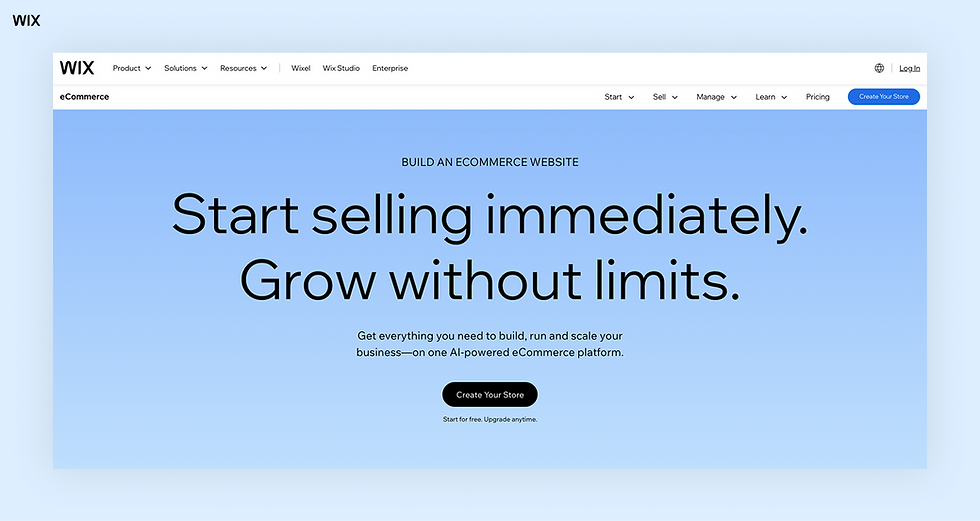
Wix supports a range of eCommerce models, allowing businesses to go beyond a single type of sale and build more flexible revenue strategies. From physical products and digital downloads to subscriptions, services and event ticketing, businesses can manage multiple revenue streams within one unified platform.
Using Wix Harmony, users can also create a full-scale online store from the start, combining AI-assisted setup with a customizable storefront. This makes it easier to understand how to make an eCommerce website while still having full control over design and structure, including advanced eCommerce web design capabilities for more tailored store experiences.
As stores grow, Wix is designed to support increasing complexity, including larger product catalogs, higher transaction volumes and more advanced sales workflows. This is powered in part by its AI eCommerce builder features, which help optimize store setup, product presentation and conversion-focused layouts. This makes it suitable not only for launching an online store, but also for scaling operations over time.
Wix also includes built-in automation tools that help streamline and optimize eCommerce website performance. Features such as abandoned cart recovery, automated discount rules and AI-powered product recommendations support conversion optimization while reducing manual work.
For businesses selling across multiple channels, Wix enables omnichannel retail by connecting online stores with marketplaces, social platforms and in-person point-of-sale systems. This allows inventory, orders and customer data to be managed from a single dashboard.
The platform also offers flexibility in how storefronts and checkout experiences are configured, giving businesses the ability to adapt their site as their needs evolve. This includes customizing customer journeys, sales flows and backend processes to align with different business models.
To support more advanced operations, Wix integrates with a wide range of external tools, enabling connections with CRM systems, marketing platforms and fulfillment providers.
"Selling online isn’t just about having a product, it’s about showing it off the right way. Wix eCommerce makes it easy to create product pages that look amazing and convert visitors into buyers." - Adi Avraham, senior SEO growth at Wix
Wix pricing
Wix pricing offers a range of plans designed to support different types of websites and business needs:
Free plan: Build a website at no cost with hosting included, access to the drag-and-drop editor, plus all templates available for free.
Light plan ($17/month): Ideal for personal sites or simple professional websites, with basic storage and features. Includes a free domain name for one year.
Core plan ($29/month): Great for users who need more storage, marketing tools and the ability to accept payments. Includes a free custom domain for one year.
Business Plan ($39/month): Suitable for growing websites that require expanded tools, standard eCommerce features and higher capacity. Includes a free custom domain for one year.
Business Elite Plan ($159/month): Designed for high-traffic sites or advanced users, offering maximum resources, advanced eCommerce capabilities and an extended toolset. Includes a free custom domain for one year.
*Prices based on annual billing, month-to-month plans are also available. Free domain offer applies to the first year only.
How Wix fits your goals

When evaluating Wix alternatives, it helps to map platform capabilities to real-world website goals. Wix supports a wide range of workflows, making it relevant for users learning how to make a website from scratch, launching a business site or using an AI website builder to speed up setup. With over 2,000 professionally designed website templates available, it also gives users a strong starting point across industries and use cases.
For entrepreneurs and small business owners
Wix supports fast website launches through ready-to-use eCommerce website templates, a drag-and-drop editor and AI-assisted site creation tools. This makes it practical for founders and service providers who want to establish an online presence without managing hosting or technical setup.
Its built-in business tools support bookings, contact forms, email campaigns, SEO settings, automations and customer management, allowing users to centralize day-to-day operations within the same platform.
For businesses selling online, Wix also includes integrated payments, product catalogs, inventory tracking and shipping workflows, supporting eCommerce websites and service-based checkout experiences.
For freelancers and creatives
Wix is commonly used for portfolio websites, service showcases and personal brands. The visual editor allows users to create highly customized pages for design work, photography, consulting services and other client-facing experiences.
Its AI-assisted tools can help generate layouts, text suggestions and design directions, which can speed up the early stages of building a personal or professional website.
Because templates, typography, color systems and layout sections remain editable, creatives can tailor the final result to reflect their brand identity and style preferences.
Explore portfolio website templates →
For growing teams and professionals
Wix also supports collaborative workflows through shared editing access, role permissions and integrations that help teams manage content updates or client-facing sites more efficiently. With Wix Studio, teams and professionals can also access more advanced design systems, responsive controls and streamlined collaboration tools built for multi-project workflows.
For audience growth, the platform includes analytics, SEO tools, email marketing and audience segmentation features that support ongoing optimization and campaign management.
As project needs evolve, users can expand from a basic informational site into a content hub, booking platform, membership site or online store using higher-tier plans and app integrations.
Tip: Start by identifying your primary workflow goal, whether that’s fast launch, visual storytelling, lead generation or online selling, and focus on the platform features that directly support that use case.
Final thoughts
There are many strong Wix alternatives, and the right choice depends on the type of website you’re building, your budget and the workflow that feels most natural for your team.
Some platforms are better suited for open-source flexibility, others for fast hosted setup, design-heavy workflows or dedicated eCommerce. The most important step is evaluating each platform based on your actual project requirements rather than defaulting to brand familiarity alone.
For readers exploring Wix specifically, this guide provides broader context for how the platform fits into the overall website builder landscape, making it easier to understand where different solutions align with different goals.
“The best website builder isn’t defined by popularity, but by how well it aligns with your workflow, technical needs and long-term goals. Different platforms solve different problems, what matters is choosing the one that fits how you want to build and grow.” - Rebecca Tomasis, organic growth content lead at Wix.
Experience how Wix works firsthand, you can start building your site for free and explore its tools, templates and AI features at your own pace. Try Wix for free →
Editor’s note: Pricing, features and platform details in this article are accurate as of April 2026 and may change over time. Readers are encouraged to check each provider’s official website for the most up-to-date information.
Wix alternatives FAQ
Is Wix good for small businesses?
Yes, Wix is widely used by small businesses because it combines website creation, hosting and built-in business tools in one platform. Users can manage design, SEO, bookings, email marketing and eCommerce without needing separate services.
What makes Wix different from other website builders?
Wix combines AI-assisted website creation, drag-and-drop customization and integrated business tools within a single workflow. With Wix Harmony, users can generate a site structure based on their goals and then customize every element visually, supporting both fast setup and long-term flexibility.
Can I build a website from scratch with Wix?
Yes. Wix supports building a website from scratch using templates, a visual editor and AI-assisted setup tools. Users can start with a generated layout or a blank canvas and customize the site as their needs evolve.
What should I look for in a Wix alternative?
When evaluating Wix alternatives, consider your preferred workflow, level of technical control, design flexibility and the types of features you need. This may include hosting setup, eCommerce capabilities, integrations, automation tools and scalability as your site grows.
Does Wix support eCommerce websites?
Yes, Wix is a full-scale eCommerce platform designed to support businesses from initial setup through advanced online selling. It provides the infrastructure needed to manage growing operations, including product catalogs, payments, inventory and shipping workflows.
Wix supports flexible eCommerce website design, allowing businesses to customize storefronts, checkout experiences and customer journeys based on their needs. The platform also includes built-in automation tools, AI-driven features and integrations that support scalable eCommerce performance over time.
Are Wix alternatives better for advanced users?
Some platforms are designed for users who prefer more technical control, such as working with code or managing their own hosting. Others focus on visual editing or faster setup. The right choice depends on your experience level, workflow preferences and project requirements.
Can Wix support large or growing websites?
Yes, Wix is designed to support websites as they grow, including higher traffic, expanded content and more advanced business needs. Users can scale from a basic site to eCommerce, memberships, bookings or content-driven platforms within the same ecosystem.
Do I need technical skills to use Wix?
No, Wix is designed to be accessible without coding knowledge. Users can build and manage a website using visual tools and AI-assisted features, while more advanced customization options are available for users who want additional control.


