- May 24
- 6 min read
Updated: Jun 17

A portfolio is a curated collection of work samples, projects and accomplishments that showcases your skills and expertise as a professional, student or artist.
Unlike a resume that lists qualifications, a portfolio website provides tangible evidence of your abilities through actual work samples. Thanks to free website builders, creating a portfolio online is easier than ever. A portfolio has multiple purposes because it:
Demonstrates your competence and skill level
Showcases your unique personal and professional style and approach
Documents your professional growth over time
Provides concrete examples for job interviews or client pitches
Establishes strong credibility in your field or specific profession
Worth knowing: a portfolio's job changes depending on who's looking at it. The same site might be read by a hiring manager, a potential client, a collaborator or a journalist and each one wants different proof. Decide who your primary audience is before you decide what work to feature. The portfolios that feel off are usually the ones trying to serve every audience at once.

With Wix’s portfolio builder, you can create a professional, eye-catching portfolio that shows your best work in just a few clicks. Wix’s customizable website templates and easy-to-use tools let you present your skills with confidence–leaving a lasting impression on anyone who visits your site.
Get inspired by these best portfolio websites.
What are the different types of portfolios?
Creative portfolios
Used by designers, artists, photographers, writers.
For example, Olya Black’s web design portfolio excels in its simplicity.

Designers portfolios should include high-quality images showing their final work, process sketches and development stages, detailed project briefs and client constraints, before and after comparisons where possible.
In this example, Jessie’s art portfolio is full of flair.
Be inspired by these art portfolio examples.

We love how Vanessa Mckeown uses her photography and art portfolio to show off her colorful work and to sell it.
Check out these photography portfolio examples to see what works and what doesn’t.

Be inspired by these writing portfolio examples
See how Sam Carlson takes his writing portfolio a step further by putting his client work front and center.

For a sense of what a creative portfolio can actually unlock, consider Gergei Erdei, a former Gucci designer who left to start his own luxury homewares brand. He built the first version of his site with a hired developer, scrapped it because he hated it, then rebuilt it himself. "I loved building it myself because I could be obsessive about the details," he says. "For a creative person like me, getting the composition and the feel of each page exactly right isn't a small thing. And Wix's drag-and-drop builder made it possible to get that precision without writing a single line of code." That site became the credibility anchor that helped him pitch and land Matches Fashion, one of the world's top luxury ecommerce platforms, as his first client.
Writers portfolios should focus on showing a variety of content types and formats, a range of voice, tone and style samples, as well as published pieces with contextual information plus results and performance metrics when available.
Technical portfolios
Used by developers, engineers, architects.
Explore how Gage Home Designs nails the essentials of a strong architecture portfolio website, especially when it comes to building trust and showing off their work.

Developers portfolios should be made up of code samples with explanation, project repositories with documentation, technical challenges and solution approaches plus deployment examples and functional outcomes.
Professional portfolios
Used by business professionals, marketers, consultants.
See how Mega Green Solutions’ portfolio effectively demonstrates a personal touch while maintaining a professional feel.

Business professionals can use their portfolio to include case studies with measurable results, strategy documents and implementation examples, plus leadership initiatives taken and project management experience.
Nicole Michler, who runs the London-based coaching practice Phase 20, treats her portfolio site as the centre of her business rather than a side asset. "Everything happens on my website," she explains, "and it gives me that instant credibility because of the way I can present myself." Operating solo, she has worked with more than 100 clients across 15+ industries, with the site driving credibility, client intake and the email automations behind both.
One thing worth knowing: case studies do the heaviest lifting on a professional portfolio. A list of past clients tells a reader you've done the work but a case study tells them how you think. For each major piece, write the problem, your approach and the outcome in plain language, even if the outcome is qualitative. Visitors making a hiring or buying decision are looking for evidence of judgment, not just evidence of activity.
Explore how Web design agency Lets One works closely with businesses to create an integrated marketing strategy that involves website creation, branding and social media.
Be inspired by these marketing portfolio examples.

Academic portfolios
Used in educational settings to demonstrate learning, for example homeschool portfolios.
The Eclectic Homeschool's portfolio is bursting with personality and creativity.

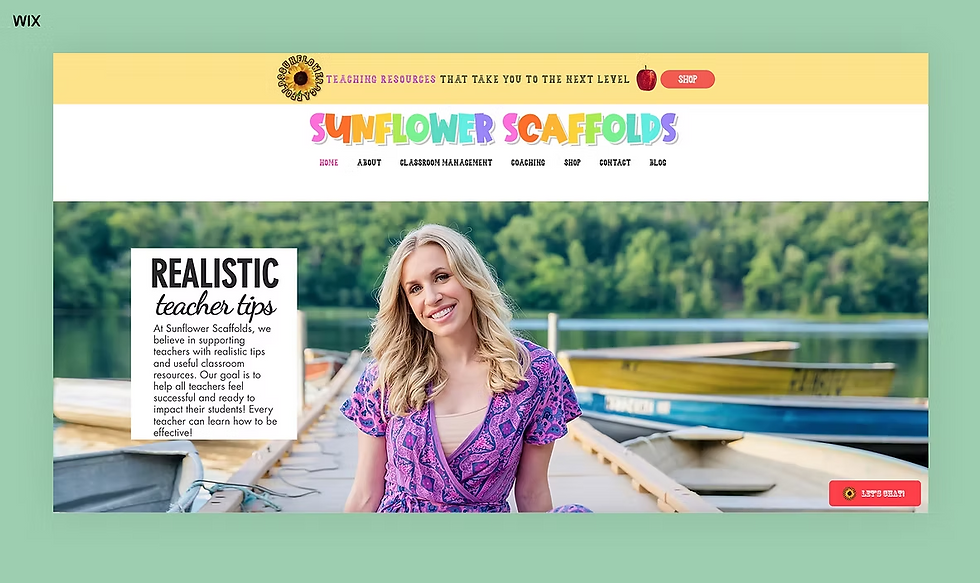
Be inspired by how Sunflower Scaffolds’ teaching portfolio embraces a bold, expressive color scheme.
Investment portfolios
Used for collections of financial assets managed for specific objectives
Create your portfolio based on your industry:
Portfolio types by format
Physical portfolios: Tangible collections in folders, binders, or presentation cases
Digital portfolios: Online presentations via dedicated websites, PDFs or platforms
Portfolio types by purpose
Resume portfolios: Create by job seekers, often to complement not replace a resume. Learn more about how to make a portfolio for a job.
Client portfolios: Designed to win client business or a specific project.
Growth portfolios: Documenting professional development over time.
PR portfolios: Made to showcase publicist examples and real-world results to attract clients. Learn more about how to make a PR portfolio.
What are the essential components of a portfolio?
While contents vary by field, effective portfolios typically include:
Carefully curated work samples to show the range and quality of your work.
Case studies that show specific projects of yours from concept to completion.
Documentation of your process with insights into your methodology and approach.
Context setting, including explanations of challenges, solutions and outcomes throughout each project.
Relevant technical information about tools, technologies or techniques used.
A professional biography with a brief introduction highlighting your background and expertise.
Testimonials and results centered around client feedback or measurable outcomes of your work.
Worth knowing: the most common mistake on portfolio sites is showing too much. A curated set of five to eight strong pieces almost always outperforms thirty mixed ones. Visitors won't dig past the first impression to find your best work, so put the strongest pieces first and cut anything that doesn't match the level. A portfolio is judged by its weakest item, not its average.
How to make a portfolio that wows

For a working example of curation and structure done right, look at Gita Jacobson, the founder of In the Deets, a renovation consulting firm based in the USA. "It seemed easy to work with, and the website templates were very high-end looking," she says. "I also liked that I didn't need to know how to code, I could just drag and drop elements and get creative." Jacobson used the site itself, along with its built-in SEO blog, to acquire her first consulting clients. Her structural choice mattered: she merged the visual languages of interior design and construction into one site, a format her competitors weren't offering.
Worth knowing: portfolio templates are a fast starting point but treat any template and AI created portfolio draft as a draft rather than a finished design. Customize the typography, spacing and color to match your actual work, and resize images so the site loads quickly. The portfolios that get bookmarked and shared are the ones that feel like an extension of the work itself, not a generic frame around it.
What is a portfolio and how can it help you grow?

Acts as a dynamic showcase of your work: Its easily accessible to anyone with the URL link, regardless of their location in the world or time zone. People respond more positively the more accessible an asset it and it opens your work up to a global audience. Sharing your portfolio is as simple as sending a link, making it an efficient way to network and apply for new opportunities.
Its a visual proof of your skills: Whether you use images, videos or audio to to visually show your capabilities, they're bound to be more engaging and impactful than a traditional one dimensional typed resume.
Visibility boosting: A digital portfolio boosts your visibility, makes it easier for potential employers and clients to discover your work.
Its super easy and fast to update: It allows for quick and easy updates, ensuring your portfolio always features your most recent and impressive projects.
You tailor the content: You have the ability to customize your portfolio to highlight the skills and experiences most relevant to specific opportunities.
Reinforce your personal branding: It serves as a strong tool for personal branding, allowing you to express your professional style and stand out from the competition.
Get started with Wix’s AI portfolio generator.


