Updated: 4 days ago
The perfect .app domain is just a click away: register your .app domain→
If you're building an app, software product or digital service, your domain name can say more than just where people can find you. The extension at the end of your URL can help signal what your product is and who it's for.
The .app domain extension was created with digital products in mind, making it a natural fit for everything from SaaS platforms and mobile apps to developer tools and web-based services. The bigger question is: is .app actually a good choice for your website?
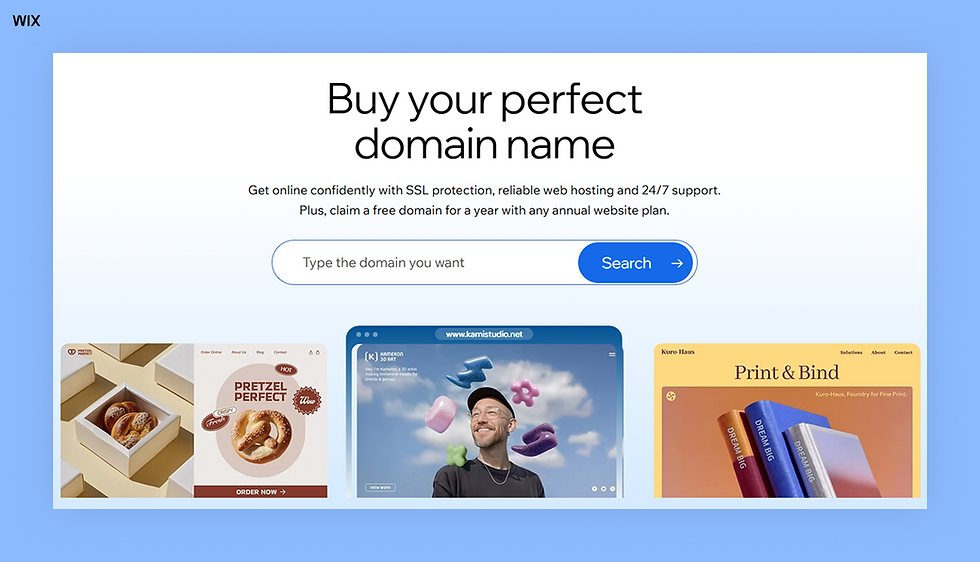
Secure your perfect domain in just a few clicks with Wix. Get everything you need in one place: business email, reliable hosting, SSL protection and full privacy. With 24/7 support and no hidden fees, getting your site live is simple and worry-free.
TL;DR: what is a .app domain
A .app domain is a good choice for apps, SaaS products, software and other digital products, especially if you want your domain to communicate what you offer. It has no registration restrictions and requires HTTPS by default, while offering more availability than the crowded .com namespace.
You’ll learn:
What a .app domain is and how it works
Why .app domains require HTTPS
Who should use a .app domain
How .app compares with .com, .io, .dev and .tech
How to register a .app domain
How .app domains affect SEO
What is a .app domain?
A .app domain is a generic top-level domain (gTLD) created for mobile apps, web apps, software and tech projects. It was launched in 2018 and is operated by Google Registry. The .app ending makes it clear that a website is connected to an app or digital product.
A key feature of .app domains is built-in security: every .app website must use HTTPS. This means you need an SSL certificate for your site to load in modern browsers.
Anyone can register a .app domain. You don't need to own an app or prove that you're a developer or software company. Since .app is newer than endings like .com, you may also have a better chance of finding a short or memorable domain name that's still available.
Learn more:

How does a .app domain work?
A .app domain works much like any other domain. You register a name, connect it to your website or server and visitors can reach your site by entering the domain in their browser. The key difference is that .app domains require HTTPS.
The entire .app domain is covered by HSTS, a browser security feature that forces connections to use HTTPS. As a result, a .app website needs a valid SSL/TLS certificate to load properly in modern browsers. You can't simply run a .app website over an unencrypted HTTP connection.
This HTTPS requirement is built into the .app domain ending, making secure connections a requirement rather than an optional setting.
One thing worth knowing: The HTTPS requirement means you need a valid SSL certificate before your .app domain will work in any browser. In practice, most registrars, including Wix, include a free SSL certificate with every domain registration, so this is handled for you automatically when you set up your site.
Learn more:

Who should use a .app domain?
A .app domain works best for projects where software or an app is at the center of what you offer. The ending gives visitors an immediate clue about your product and can be especially useful when you want a domain that clearly connects your name with an app, rather than a general business website.
Mobile app developers: Use a .app domain for an app website, download page, support center or release information. It gives you one clear address to use across app listings, marketing materials and social profiles.
SaaS companies: A .app domain fits software that customers use in their browsers. It can work for the main product site, an app login page or a separate environment where customers access the software.
Web app creators: If your product runs primarily in a browser, .app makes the purpose of the domain clear without requiring “app” to be added to the brand name.
Tech startups: A .app domain can be useful when the brand's preferred .com name is unavailable. It can also give an early-stage software company a domain that immediately signals what it builds.
Developers and designers: Use .app for a portfolio website, personal projects, demos or technical experiments, particularly when your work focuses on software and digital products.
Developer tools and APIs: A .app domain can suit products built for developers, including API services, coding tools, testing platforms and other software infrastructure.
Found the perfect name for your business? Lock in your domain before someone else does.
.app domain vs .com and other alternatives
.com is the most recognized domain extension in the world. It carries instant global familiarity and, for consumer-facing products where broad recognition matters, it's still the default choice for good reason. The trade-off is availability. Nearly every short, memorable .com is already registered, which forces most new projects into compromises.
.app offers a different trade-off. The namespace is far less crowded, which means your exact brand name is much more likely to be available. The extension carries a clear signal for tech and digital products, and HTTPS enforcement is baked in from the start rather than left as an optional setup step. The same logic runs further down the niche list, where a .tools domain suits products that are a set of utilities rather than a single app.
For a developer tool, SaaS platform or app-specific landing page, .app is a credible, modern alternative when the .com you want is taken or out of reach.
One thing worth knowing: Registering a .app domain doesn't prevent you from also owning the .com version of your name. Many businesses register both and redirect one to the other, which means users who automatically type .com still land on the right site. It's a common approach and worth considering if the .com is available at a reasonable price.
Explore more:

.app vs. .io, .dev and .tech
Other extensions in the same space include .io, .dev and .tech. Each carries a different signal. .io has been popular in the startup world for years but is technically a country-code domain.
.dev is also Google-registered and HTTPS-required by default, but signals development more than a finished product. .tech is broader and less specific. .app sits in a clear middle ground: technical enough to signal digital, specific enough to communicate product.
You can browse the full list of available domain extensions on Wix to find the one that fits your brand.

How to register a .app domain
Registering a .app domain follows the same basic process as registering any other domain name.
01. Start with a name search
The best .app names are short, easy to spell and as close to your brand name as possible. Avoid hyphens and numbers where you can. Once you have a name in mind, use a domain name search tool to check availability before you build anything around it.
02. Register through a domain registrar
Wix lets you search and register .app domains directly, with a free SSL certificate included so your site is secure and browser-accessible from day one. Check current domain pricing to see what .app registration costs — it typically falls in the $13 to $20 per year range, though this varies across domain registrars.
03. Connect the domain to your site
After registration, you update your DNS settings to point the domain at your hosting provider. If you register your domain and build your site through the same website builder, this step is often automated.
Worth knowing: There are no eligibility requirements for .app domains. You don't need to prove you operate an app, be a registered business or meet any technical criteria. Anyone can register a .app domain.
Read more: How to buy a domain name

Register a .app domain with Wix
Wix is an ICANN-accredited domain registrar, which means you can search, register and manage your .app domain directly through Wix without going through a separate provider. Every domain registration includes a free SSL certificate, which is essential for .app domains since the TLD requires HTTPS by default. The security requirement is handled automatically from the moment your domain is active.
Managing your domain through the same platform you use to build your site means DNS settings, SSL activation and domain connection are all handled in one place. There is no separate provider to configure, no technical setup to work through and no risk of an expired certificate breaking your .app site in the future.
Wix also includes domain privacy protection, a 24/7 support team and tools to manage your DNS, renewals and settings all in one dashboard. You can also set up a professional business email address tied to your new .app domain, which keeps your brand consistent across your website and your communications.

Is a .app domain good for SEO?
The domain extension itself is not a direct ranking factor. Search engines evaluate content quality, authority, relevance and links — not which TLD a site uses. A well-built .app site will rank exactly as well as the same site on a .com, assuming everything else is equal.
What matters indirectly is HTTPS. Secure connections are a confirmed Google ranking signal, and because .app domains enforce HTTPS by default, your site always meets that baseline from the moment you connect your domain. On other extensions, failing to set up SSL correctly creates both browser warnings and SEO problems. With .app, that risk doesn't exist.
For new sites weighing domain options from an SEO perspective, the choice of extension matters less than the choice of name. A memorable, brandable name that's easy to search for and share matters far more for long-term rankings than the extension it ends with.
Discover more: What is domain authority
Worth knowing: One practical SEO advantage of .app is that the mandatory HTTPS requirement removes a common setup error. Many new sites lose early ranking potential because SSL isn't configured correctly or expires. With .app, browsers simply won't load an insecure version, which means the HTTPS baseline is enforced at the TLD level rather than relying on correct manual setup.
When you upgrade to a premium plan, you'll even get a voucher for a free domain name for your first year.

.app domain FAQ:
What does .app mean in a domain name?
The .app ending signals that a domain is associated with an app, software or other digital product. It’s commonly used by mobile app developers, SaaS companies, web apps and tech startups.
Do .app domains require HTTPS?
Yes. The .app TLD is on the HSTS Preload List, which means browsers enforce HTTPS connections automatically. A .app site without a valid SSL certificate will not load. This applies to every .app domain and cannot be changed. Most registrars include a free SSL certificate with .app domain registrations.
How much does a .app domain cost?
.app domain prices vary by registrar, but registration typically costs around $13–$20 per year. Renewal prices can be higher, so check both the first-year and renewal rates before registering.
Can anyone register a .app domain?
Yes. There are no eligibility restrictions for .app domains. Any individual, business or organization can register a .app domain, regardless of location or whether they operate an app.
Is .app better than .com for a tech startup?
It depends on availability and positioning. If the .com version of your name is available and affordable, .com still carries broader global recognition. If the .com is taken or out of reach, a .app domain is a credible, modern alternative that signals tech clearly and has far more availability. Many startups use .app successfully for developer tools, SaaS products and app landing pages.