
Prompt engineering controls what you ask an AI website generator to do, while context engineering controls the information it can use while building your site. Both shape the quality and consistency of an AI-generated website, and many problems that look like bad prompting are actually context problems. This guide explains the difference, when each one matters and how to use both to build a better website with AI.
TL;DR: prompt engineering vs context engineering
The two terms describe different layers of the same job. Prompt engineering shapes the instruction. Context engineering shapes the information available when the AI follows it. Once a site exists and you are changing it rather than generating it from scratch, the second layer starts doing most of the work.
How they differ | Prompt engineering | Context engineering |
Controls | What you ask the AI to do | What the AI knows while doing it |
Scope | One instruction at a time | The whole working environment of the build |
Website example | Make this hero section feel more premium | Brand rules, page structure, existing content, earlier edits |
Best for | Direction | Consistency |
When it breaks | The AI does the wrong thing | The AI does the right thing in the wrong place |

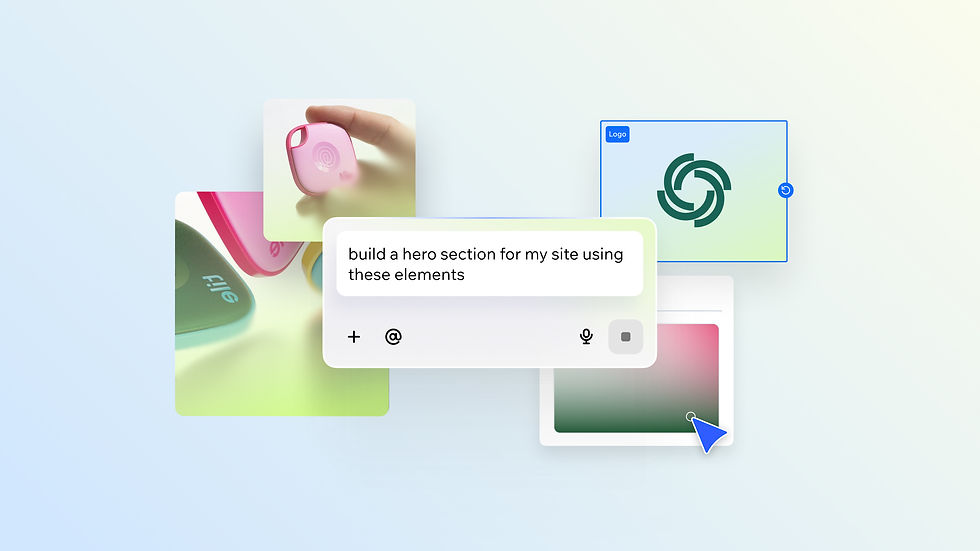
Wix Harmony brings AI and manual creation together in a single, smart platform. You can generate full pages, layouts and content with natural language, then fine-tune every detail with precise drag-and-drop control. It’s faster, more flexible website creation, without sacrificing quality or creative freedom.
What is the difference between prompt engineering and context engineering?
The short version is that one sits inside the other. Your prompt is a single piece of information the AI reads. The context is the full set of information it can use at that moment, prompt included.
01. What prompt engineering controls
Prompt engineering is the practice of writing an instruction precise enough that the AI produces what you meant on the first pass. On a website build that means naming the scope, the audience, the function and the visual direction rather than leaving the tool to guess at any of them. It is a writing skill and it works one request at a time.
The ceiling is that a prompt only governs the request it belongs to. You can write a flawless instruction and still get something that clashes with the rest of your site, because nothing in that sentence told the AI what the rest of your site looks like.
02. What context engineering controls
Context engineering is the practice of managing what the AI can see while it works. On a website build that covers your brand rules, your existing pages, the business information you shared earlier and the decisions you already made during the session. None of it lives inside the sentence you just typed.
This is the layer that decides consistency. Two identical prompts can return very different pages if one runs with your brand kit and site structure loaded and the other runs cold. Any website creation tool that keeps working after the first generation depends on it.
Wix Harmony is Wix's AI website builder that lets you go from a single prompt to a fully designed, business-ready website. Prompt engineering is really a part of context engineering, since your prompt is the one piece of context you write fresh every time and the rest is context you set up once and keep reusing.
03. Scope, one request or the whole build
Scope is one of the clearest ways to separate the two. A prompt mainly shapes the request it is attached to, while context can carry information across the rest of the build and help keep the finished site consistent.
That difference changes where your effort pays off. Time spent sharpening one prompt improves one result. Time spent setting up context can improve every result that follows.
The prompt itself may be temporary, but the information in it can become part of the context once the build carries it forward.
04. When you reach for each one
Reach for prompt engineering when you need direction. A new section, a different layout, a rewritten headline, anything where you are telling the AI to do something it has not done yet. This is the part that feels closest to working in a no code website builder, where you say what you want and something appears.
Reach for context engineering when you need consistency. Your brand holding up across pages, your real product details showing up in the copy, your earlier decisions surviving the next generation. Direction is a one time ask. Consistency is a standing condition, and standing conditions belong in the context.
05. How each one fails
The two fail in different ways, and the difference is easy to spot once you know it. A prompt failure gives you the wrong thing. You asked for a pricing section and got something closer to a features list.
A context failure gives you the right thing in the wrong place. The section is exactly what you asked for, but the fonts are off, the tone clashes with the page before it or it quietly replaced something you had already fixed. Nothing about the request was wrong, so rewording it will not help.
06. What you change to fix it
A prompt problem is fixed in the sentence. Name the target, name the outcome you want and try again, and one pass is usually enough.
A context problem is fixed in the setup. Move the instruction you keep repeating into a global setting, load the real content you have been describing or narrow the request so the AI has less to hold at once. The test for which one you have is simple. If you would have to say the same thing again next week, it belongs in the context.
Worth knowing: these are not competing practices and you do not have to pick one. Good context makes your prompts more reliable, and a clear prompt makes good context easier for the AI to act on. If careful prompting has been working for you, none of that skill goes to waste.
Find out more:
Why better prompts stop working when you build a website with AI
Three things tend to show up once a build gets past the first page.
The home page looks right and the next page forgets the style.
You repeat the same brand instructions in request after request.
Fixing one section quietly changes something you had already settled.
None of those are prompt failures. The instruction was fine each time. What changed is that the AI lost track of, or never had, the information it needed to place your request correctly. At that point rewording the prompt is the wrong repair.
Expert tip from Rebecca Tomasis, Head of Organic Growth Marketing at Wix:
“Agentic AI is the next evolution of what prompting started. Prompting a website is a single input, single output interaction. Agentic AI turns that into an ongoing relationship: the system monitors your site's performance, identifies what needs updating and takes action without waiting to be asked. For small business owners, that's the difference between having a website and having a digital business partner.”
That move from a single exchange to an ongoing one is exactly where context engineering starts to matter. A one off generation only needs a good prompt. A site you keep editing for months needs the AI to know what it is editing.
One thing worth knowing: a context problem and a prompt problem can look identical from the outside. The quickest way to tell them apart is to ask for the same thing in a fresh session with nothing else loaded. If the result improves, the wording was probably not what was holding you back.
Read more:

What counts as context when you build a website with AI
Context is not one field you fill in at the start. It is everything the AI can reach while it builds, and on a website project it falls into four groups.
01. Your goals, brief and site scope
Say you describe a yoga studio in Portland running small beginner classes for people coming back from an injury. The home page you get back sounds exactly like that. Then you ask for a pricing page and it reads like it was written for a gym chain.
The brief did not stop being true. It stopped being in the room. What the site is for, who it serves and which pages it needs are context, and the AI needs to keep reading them long after the first generation.
Put that in a prompt and it shapes one request. Put it into the build and it shapes all of them.
02. Your brand rules and visual style
Fonts, colors, spacing and tone are context. Set them once as global rules and every later request inherits them, which saves you from restating your palette in a prompt you only wanted to use to move a button.
Brand rules also protect you from drift. When the AI has a defined style to work inside, a new section matches the rest of your site by default rather than by correction. Good website design gives it something consistent to aim at instead of its own defaults.
03. Your existing content and business information
A prompt can describe your product. Only context can hand over its real name, its price and its photo.
Product names, service descriptions, prices and images are things you do not want the AI guessing at, and it will guess if you leave the gap open. Getting them into the build is what turns generated copy from plausible filler into something about your actual business.
69% of Wix Harmony users replace the default images on their AI-generated site, most opting for their own photos and product assets, according to Wix State of Websites 2026. That is a context gap closing in real time, and the sooner your own assets are in the build, the less generic everything downstream looks.
04. Your previous decisions and build history
This is the group most people never think of as context at all. The sections you approved, the copy you rewrote and the layout you settled on are information too, and a tool that holds that history will not undo your work while doing what you asked.
It is also why small focused requests beat sweeping ones late in a build. The more of your site the AI regenerates at once, the more of your earlier decisions it has to hold on to at once.
A prompt tells the AI what to change. Context tells it what to leave alone.
Worth knowing: more context is not automatically better context. Loading every document you own into a build tends to make results vaguer rather than sharper, because the AI has to work out which parts apply. Give it what constrains the decision in front of it and leave the rest out.
Learn more:
How prompt engineering and context engineering work together in Wix Harmony
The practical version of all this is simple. Use prompts to say what should change right now and use context to hold what you are already building. Wix Harmony takes you from a single prompt to a business-ready site for any industry or creative vision, and the four steps below keep each layer doing its own job from there.
01. Start with a prompt that defines the scope
This step is all prompt. Your first request carries more weight than any that follow, because it sets the frame everything else gets added to. Name the pages, the audience, the actions a visitor should be able to complete and the visual direction, and the structure arrives wired together rather than as a shell you assemble afterward.
Wix Harmony democratizes vibe coding for websites so the next generation of entrepreneurs can succeed online in an AI-powered world. The opening brief is also where your prompt quietly turns into context, since everything you name in it is what later requests get measured against.
02. Give Aria the context of what you are building
This one is all context. Aria is Wix Harmony’s built-in AI agent and she stays aware of what is on your canvas, so a follow up request lands inside the build instead of restarting it. Telling her what a section is for, and not only what it should look like, gives her something to work from on every later change.
Ask for one change at a time and look at it before the next. A tighter loop keeps the context clean and makes it obvious which request produced which result.
03. Keep brand decisions in the context instead of every prompt
This is the step where a prompt becomes context. The rule is that anything you would end up saying twice belongs in the setup rather than the sentence, and a brand kit sets global site styles once so your fonts, colors and spacing apply everywhere without being retyped.
The saving compounds. Every request you write after that can stay short and specific, because it no longer has to carry your brand along with it. The same principle runs through the rest of the Wix AI features, which read your site settings rather than asking you to restate them.
04. Take manual control over the details that define your brand
Some things are neither prompt nor context. Your headline, your about section and your product descriptions carry your voice, and typing them is usually quicker than describing them to anything.
90% of Wix Harmony users still manually edit their most brand-sensitive details, a sign that self-expression and personality remain essential to website creation, according to Wix State of Websites 2026. Wix Harmony keeps both modes in one interface, so you can move between prompting and a drag and drop website builder without being locked into either.
Expert tip from Nir Zohar, President of Wix:
“Unlike many AI-first tools built for quick demos, Wix Harmony is designed for real businesses. AI is native to the platform, not layered on top, so changes are applied consistently across the site. Users can move fluidly between prompting and hands-on design, confident they are building something stable, scalable and ready to grow.”
One thing worth knowing: the point of good context is not to remove you from the process. It is to stop you re-explaining yourself, so the attention you do spend goes to the parts of the site only you can write.
Explore more:
Prompt engineering vs context engineering FAQ
Is prompt engineering dead?
No, though the framing has shifted. Prompt engineering was the whole job when AI tools handled one request at a time, and it is now one layer inside the larger job of managing context. The skill still decides what you get back from any single request. It just stopped being the only thing that decides how a whole website turns out.
Do I need to learn context engineering to use an AI website builder?
Not as a discipline. What helps is knowing that your brand rules, your existing content and your earlier decisions are all things the builder can use, and that setting them up once beats repeating them in every request. That single habit removes most of the repetition people find frustrating.
Why does the AI keep forgetting what I told it earlier?
Usually because the information only ever lived in a single message. Anything you said once in a chat can fall out of view as the session grows, while anything stored as a site level setting stays available the whole time. Moving your recurring instructions into global settings is the fix.
What is an example of context engineering on a website?
Setting a brand kit is the clearest one. You define your fonts, colors and spacing once at site level, and every section the AI generates after that inherits them without you mentioning your brand again. Uploading your real product photos and prices works the same way. You are changing what the AI knows rather than what you asked it for.
Which should I fix first when a result is wrong?
Start with the prompt, since it is faster to test. Rewrite the request so it names the target and the outcome you want, then try once more. If a clear instruction still returns something that clashes with the rest of your site, the problem is context rather than wording.


