- 3 days ago
- 6 min read
Turn your ideas into sales and start selling with Wix eCommerce→

eCommerce localization is the process of adapting your online store for specific international markets. It goes beyond translation to cover language, currency, payment methods, cultural nuances and local shopping expectations. If you want to build an eCommerce website that works globally, localization is where it starts. Wix Multilingual lets you build multilingual storefronts without rebuilding your store from scratch.
This guide covers what eCommerce localization means, why it matters, which elements to adapt and how to build a strategy that works. Whether you’re learning how to start an online store or already selling and looking to expand, you’ll find everything you need here.
Create your online store with Wix today.
TL;DR: eCommerce localization
eCommerce localization is what turns international traffic into actual sales. It drives higher conversions in each market, builds trust with local shoppers and improves visibility in regional search. The right approach is to start with one market, validate demand and expand from there. Wix eCommerce handles multilingual storefronts, multi-currency payments and automated tax in one place.
Benefit | What it means for your store |
Higher conversions | Shoppers complete more purchases when prices, payments and language match their expectations. |
Stronger trust | A localized experience shows you understand the market. That familiarity drives repeat purchases. |
Competitive edge | Many markets are underserved by brands that haven’t localized. Early movers gain a real foothold. |
Multilingual SEO | Local keywords and hreflang tags bring in organic traffic that English-only stores never see. |
Ready to launch your eCommerce business? With Wix eCommerce, you can build a professional online store that attracts customers, drives sales and grows your brand. Enjoy full customization, built-in SEO and powerful marketing tools, all in one platform. Start today and turn your vision into success.
What is eCommerce localization?
eCommerce localization is the full adaptation of your online store for a specific regional market. It starts with translation but goes much further. Every part of the shopping experience needs to be adjusted so customers in a new market feel like your store was built for them, not just translated for them.
Learn more: What is eCommerce?

Why is eCommerce localization important?
eCommerce localization matters because shoppers buy from stores that feel built for them. A store that feels foreign loses sales regardless of how good the product is. Localization is what closes that gap.
Higher conversion rates: When prices, payment methods and language match local expectations, shoppers are significantly more likely to follow through to purchase.
Stronger customer trust: A localized experience signals that you understand your customer’s context. That familiarity builds the kind of loyalty that drives repeat purchases.
Competitive advantage: Many international markets are underserved by brands that haven’t localized. A well-adapted store can establish a foothold before larger competitors catch up, creating new opportunities for eCommerce growth.
Multilingual SEO visibility: Localized content, including keywords and meta tags in the local language, improves your visibility in regional search engines and brings in organic traffic you’d otherwise miss entirely. Wix's built-in eCommerce marketing tools help you manage SEO and campaigns across markets from one place.
Expert insight from Rebecca Tomasis, organic growth content lead at Wix:
“SEO should be part of the website creation process from day one, not treated as an afterthought. Organic search continues to be one of the most powerful and sustainable traffic drivers, especially for B2B businesses, and when built into the site correctly, it creates a long-term growth engine that continues to deliver value over time.”
For businesses investing in international eCommerce, localization is one of the most effective ways to improve conversions, build trust and create a better customer experience across markets.
What are the key elements of eCommerce localization?
Getting localization right means addressing every layer of the shopping experience. Here are the key elements to focus on.
Language and translation: Effective localization goes well beyond word-for-word translation. Idioms, tone, formality and humor all vary by culture. Marketing copy often needs full transcreation, adapting the intent and emotion, not just the words. Some languages also require layout changes to support right-to-left text.
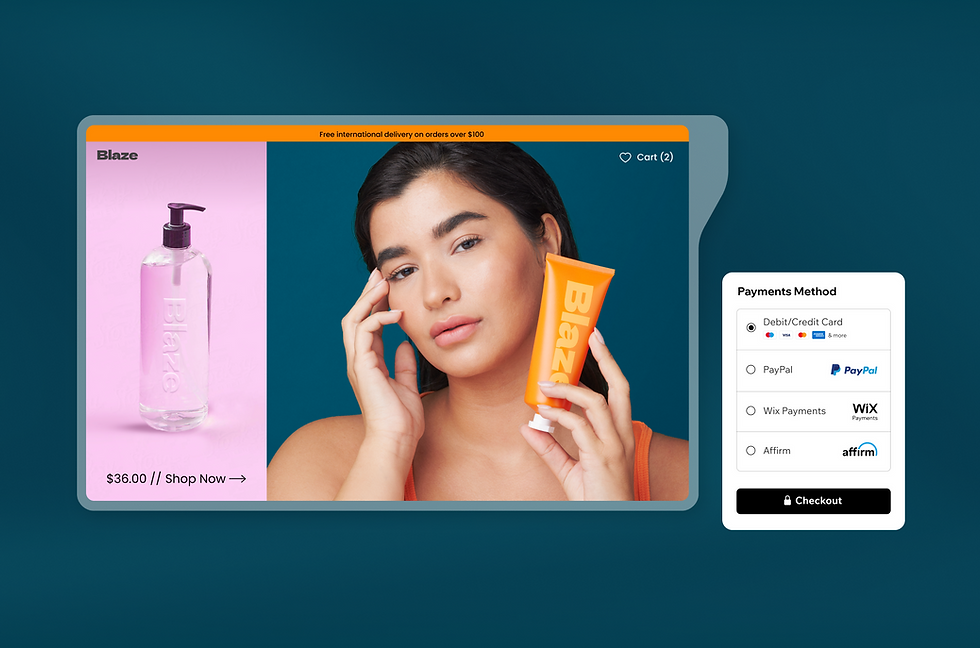
Currency and pricing: Show prices in local currency at every step of the journey, from product pages through to checkout. Currency ambiguity is one of the most common reasons shoppers abandon a purchase before completing it. Wix enables merchants to sell internationally with multi-currency payments, so shoppers see familiar pricing at every step.
Payment methods: Preferred payment methods vary widely by region. Bank transfers dominate in parts of Europe, cash-on-delivery is still common in India and parts of Eastern Europe and digital wallets lead in China. Offering only credit cards in these markets means losing a significant share of potential buyers.
Shipping, taxes and import duties: Show all costs upfront, before checkout. Unexpected import duties at delivery are one of the most common sources of negative reviews from international customers. Some countries, like India, also require taxes such as GST to be displayed separately.
Product content and imagery: Adapt product descriptions, measurements and size charts to local standards. Check your visuals too. Imagery that resonates in your home market may feel out of place or irrelevant elsewhere.
Date, time and measurement formats: Date formats, time zones and unit systems vary by country and are easy to overlook. Mixing metric and imperial units or showing the wrong date format, erodes trust quickly.
Legal and regulatory compliance: Privacy laws, consumer protection rules and tax obligations differ significantly across markets. GDPR applies across Europe, LGPD in Brazil. A local legal review before launching in a new market is a worthwhile investment.
Multilingual SEO: Localized content is only useful if people can find it. Translate your keywords, meta tags and URL structures for each market. Use hreflang tags so search engines serve the right version to the right audience.
The right eCommerce tools can handle several of these elements automatically, reducing manual work and keeping things consistent as you scale across markets.

Did you know? Wix provides high-performance retail infrastructure through automation, AI-driven merchandising and scalable systems designed for multi-channel growth and increasing transaction volume.
Expert insight from Adi Avraham, senior SEO growth at Wix
"Selling online isn’t just about having a product, it’s about showing it off the right way. Wix eCommerce makes it easy to create product pages that look amazing and convert visitors into buyers."
How to build an eCommerce localization strategy

A localization strategy gives you a repeatable framework for entering new markets. Without one, each expansion becomes a one-off project. Here’s how to build a process that scales.
1. Research your target market
Before adapting anything, confirm there’s real demand for your product in the target market. Use Google Analytics to see where your existing traffic and sales already come from. Then research local competitors, buyer behavior, preferred payment methods and any legal requirements specific to that country.
2. Prioritize languages and regions
Start with one or two markets where you already see interest or where demand is clear. Prioritize markets where the localization investment is proportionate to the revenue opportunity.
3. Localize your digital presence
Localization covers your full digital footprint, from website and product pages to email campaigns and social channels. Copy that works in English often needs to be reimagined to land the same way in another language. Localize your SEO keywords for each market too, not just the text on the page.
4. Adapt the checkout and UX
Your checkout needs local currency, preferred payment methods, accurate address validation and upfront shipping estimates. Every friction point is a potential lost sale. Wix supports multi-currency payments out of the box, making this part of the setup straightforward.
5. Test, iterate and monitor
Treat localization as an ongoing program, not a one-time launch. A/B test localized pages, track conversion rates and bounce rates by region. Refresh content regularly as market conditions change.
Learn more: How to start an eCommerce business
eCommerce localization with Wix
Wix enables merchants to sell internationally with multi-currency payments and multilingual storefronts, all from one platform. Here's what eCommerce localization with Wix looks like.
Multilingual storefronts: Wix Multilingual automatically translates your store content and creates language-specific versions of your site. All language variants are managed from a single dashboard, so your brand voice stays consistent without maintaining separate stores.
Multi-currency payments: Display prices in local currencies and accept international payments in the currencies your customers actually use. Shoppers see familiar pricing from the product page through to checkout confirmation.
Automated tax calculations: Wix supports automated sales tax calculation for supported regions. For global VAT, GST and complex regional tax rules, manual setup or third-party apps like Avalara are available.
Global and omnichannel selling: Sell across your site, social channels and physical locations with inventory and orders managed from the same backend. Wix supports omnichannel sales across online marketplaces and social platforms.
Learn more:
What is eCommerce localization FAQ
What is the difference between eCommerce translation and localization?
Translation converts text from one language to another. Localization adapts the entire shopping experience, covering language, currency, payment methods, cultural context, imagery and legal compliance, so the store feels native to customers in a specific market. Translation is one component of that process, not a substitute for it.
Why is eCommerce localization important for small businesses?
Localization opens up global markets without requiring a physical presence in each country. A well-localized store can compete with established local brands because shoppers respond to the experience, not just the company behind it. It’s one of the most cost-effective ways to grow revenue beyond your home market.
Do I need a separate website for each market?
No. A single website can serve multiple markets through localized language versions, currency settings and regional checkout configurations. Building separate sites for each market adds unnecessary complexity and makes it harder to maintain consistency across your brand.