Updated: Sep 7
Get the perfect domain for your eCommerce store: find your domain→
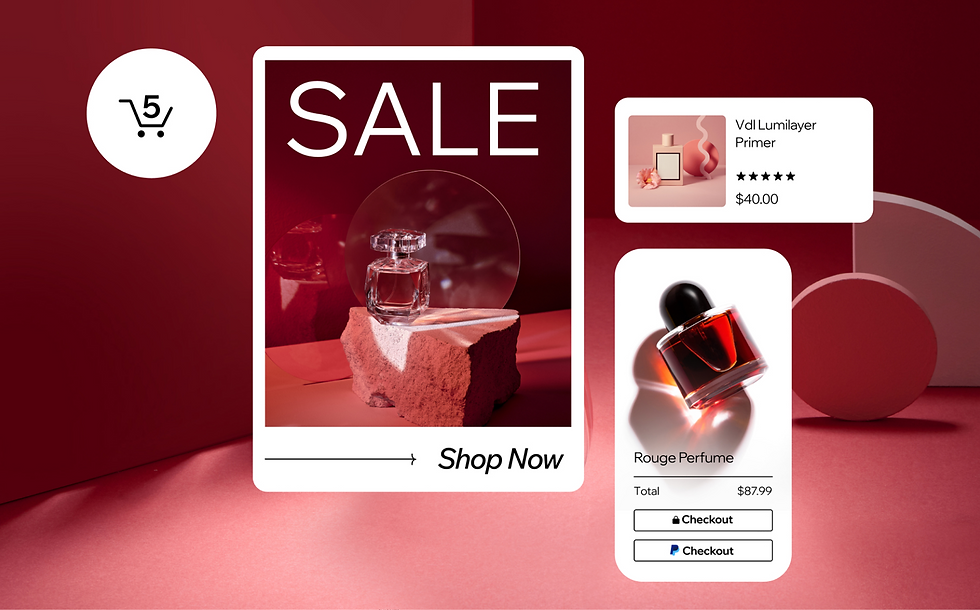
eCommerce discounts are price reductions on products or services sold through an eCommerce website, designed to drive purchases and grow revenue. From a percentage off at checkout to a buy-one-get-one deal, discounts give shoppers a reason to act now rather than later. Wix supports high-performance eCommerce operations with automated discount logic, abandoned cart recovery and customizable checkout workflows, all built into your store dashboard. Wix supports long-term eCommerce growth with built-in loyalty programs, subscription commerce, back-in-stock notifications and flexible digital gift cards designed to increase customer lifetime value.
This article covers the main types of eCommerce discounts, the business benefits they deliver, the risks to plan around and how to build a strategy that works. If you haven't launched your store yet, learning how to make an eCommerce website is a good first step. Wix offers an all-in-one online store builder with fully customizable storefronts.
Build your site and launch your first eCommerce discount today.
TL;DR: what are eCommerce discounts?
eCommerce discounts are price reductions used by online stores to drive purchases, recover abandoned carts and build customer loyalty. The type you choose determines what behavior you'll influence, so matching the format to your goal is what separates a well-run promotion from a margin hit with no lasting upside.
Discount type | Best for |
Percentage-off discounts | Sitewide sales, seasonal campaigns, first-time buyers |
Fixed-amount discounts | High-ticket items, minimum spend incentives |
BOGO (buy one, get one) | Moving inventory, increasing average order value |
Free shipping | Reducing cart abandonment |
Flash sales and limited-time offers | Creating urgency, traffic spikes |
Bundle discounts | Encouraging multi-product purchases |
Coupon and promo codes | Tracking campaigns, targeted offers |
Loyalty and referral discounts | Retention, word-of-mouth acquisition |

Ready to start selling online? Build a custom online store with Wix and get the tools to sell, manage and grow your business from one dashboard. Customize every detail, reach customers across channels and market your brand with built-in SEO and marketing tools.
What are eCommerce discounts?
An eCommerce discount is a reduction in the standard price of a product or service sold online. It can show up as a percentage off at checkout, a fixed dollar amount removed from the eCommerce shopping cart or a free item bundled with a purchase. The mechanics vary, but the goal is always the same.
Every discount gives the shopper a financial reason to buy now. Price is one of the strongest levers available to an online seller, especially when buyers can compare alternatives in seconds. That's why discounting tends to come up early when you're figuring out how to start an online store. A well-timed discount converts hesitation into a sale. A poorly timed one trains customers to wait for the next deal. Wix automates eCommerce promotions using built-in discount logic, so the rules you set apply consistently every time a qualifying order comes through.
Create your online store and start offering discounts from day one.
Types of eCommerce discounts

Not every discount type works for every goal. Here's a breakdown of the most common formats, when each one performs best and what to watch out for.
01. Percentage-off discounts
A percentage-off discount removes a fixed share of the product price, say 20% off all jackets or 15% off your first order. Shoppers understand it instantly, which is why it works well for sitewide sales, seasonal promotions and acquisition campaigns.
02. Fixed-amount discounts
Fixed-amount discounts remove a specific dollar value at checkout. A $50 off a $200 order tends to feel more tangible than 25% off, particularly on higher-priced items where the absolute saving is easier for shoppers to visualize. Tiered dollar-off structures, such as $10 off $75, $25 off $150 and $50 off $250, can also nudge customers toward larger carts. For more on structuring these effectively, see discount pricing strategies.
03. BOGO (buy one, get one)
BOGO offers give customers a free or discounted second item when they buy the first at full price. The format can take several shapes, including BOGO free, BOGO 50% off or buy two and get one free. It's particularly effective for clearing inventory on slow-moving items and for categories where customers naturally buy multiples, such as apparel, skincare and food.
04. Free shipping
eCommerce shipping costs are one of the most common reasons shoppers abandon carts. Free shipping removes that barrier entirely. It tends to work especially well when tied to a minimum order threshold, say, free shipping on orders over $50. This protects your margins while encouraging customers to add one more item to qualify. Pairing free shipping with a polished eCommerce checkout experience reduces the friction between add-to-cart and completed purchase.
Expert insight from Lisa Kammermayer, CMO of SimpleSell:
“Free shipping is a powerful marketing tool. It builds trust and enhances customer satisfaction.”
05. Flash sales and limited-time offers
A flash sale runs for a short, defined window, creating urgency that pushes fence-sitters toward a purchase. The format drives sharp spikes in traffic and conversions when used sparingly. Use it too often though and shoppers learn to wait for the next one, eroding both urgency and full-price sales.
06. Bundle discounts
Bundle discounts let customers buy a set of products at a lower combined price than if purchased separately. They increase average order value, help move complementary inventory together and often improve perceived value without requiring a large reduction on any single item.
07. Coupon and promo codes

Coupon and promo codes are alphanumeric strings customers enter at checkout to unlock a discount. The format is useful because it's trackable. You can create different codes for different channels, campaigns or audience segments. That makes it easy to see exactly where conversions come from. Codes are also a natural fit for email list growth, since they give new subscribers an immediate reason to buy.
08. Loyalty and referral discounts
Loyalty discounts reward repeat customers for coming back, while referral discounts give existing buyers an incentive to bring in new ones. Both formats tend to attract customers with higher lifetime value than those acquired through public flash sales or sitewide percentage cuts.
Learn more: What is a customer loyalty program?
Expert insight from Adi Avraham, senior SEO growth at Wix:
"The key to online sales is making it simple for your customers. With Wix, you can customize checkout flows, offer discounts and even track abandoned carts without a developer."
Benefits of eCommerce discounts

Used with intention, eCommerce discounts deliver benefits well beyond a short-term sales bump.
Increased customer acquisition: Discounts reduce the perceived risk of a first purchase. A new shopper who's unsure about your brand is more likely to convert when there's a financial cushion, such as 10% off their first order.
Reduced cart abandonment: Price is among the top reasons shoppers leave without buying. A well-placed offer like free shipping above a threshold or a time-limited code can bring them back.
Higher average order value: Bundle deals and tiered discounts push customers to spend more in a single transaction than they originally planned. Wix uses AI to recommend products based on shopper behavior, helping increase basket size without manual merchandising.
Faster inventory turnover: Targeted discounts help clear slow-moving stock before it ties up capital, without permanently lowering your product's perceived value.
Stronger customer retention: Targeted discounts for repeat buyers signal that you value their loyalty, giving them a concrete reason to come back rather than shop elsewhere.
Expert insight from Eli Brosh, head of AI research at Wix:
“We’ll see the next wave of the GenAI revolution, driven by the democratization of Machine Learning—sellers will create hyper-personalized experiences for consumers in real-time, with AI powering product recommendations, dynamic pricing, and personalized marketing.”
Learn more:
Challenges and risks of eCommerce discounts
Discounts are powerful. That cuts both ways. Running them without a plan can create problems that outlast the promotion itself.
Margin erosion: Deep or frequent discounts grow revenue on paper while quietly shrinking profit per order. Run the numbers before setting a discount level, especially on lower-margin products.
Training customers to wait for sales: If your discounts follow a predictable pattern, shoppers learn to hold off on full-price purchases. Once that habit forms, it's difficult to break.
Brand devaluation: Over-discounting signals that your standard prices aren't credible, which damages brand equity over time, particularly for premium or specialty products.
Attracting the wrong buyers: Heavy promotions tend to pull in bargain hunters rather than loyal customers. These shoppers are less likely to return at full price, increasing long-term acquisition costs.
Measuring real impact: It can be hard to tell whether a discount changed buyer behavior or simply rewarded shoppers who would have bought anyway. Without clear measurement, you're flying blind on ROI.
How to choose the right eCommerce discount
The right discount depends on the outcome you want. Start with one goal, then match the smallest effective incentive to it rather than reaching for the biggest markdown:
Acquire first-time buyers: a percentage off a first order lowers the perceived risk of trying you.
Lift average order value: tiered dollar-off thresholds or bundle pricing reward bigger carts.
Recover abandoned carts: free shipping above a threshold or a time-limited code removes the final hesitation.
Protect premium margins: keep public sitewide cuts rare and lean on targeted loyalty or referral offers.
Choosing this way keeps each promotion tied to a measurable result, so you can see what actually moved the needle rather than discounting on instinct.
How to set up eCommerce discounts on Wix
Wix includes built-in discount tools that let you create and manage discounts directly from your store dashboard, without a developer or third-party app.
01. Access discounts from your Wix dashboard
Log in to Wix to get started. From your site's dashboard, click Catalog and select Discounts to access your discount settings and create new discount campaigns.
02. Choose between automatic discounts and coupons
Wix gives you two separate discount tools and knowing which one to use saves time. Automatic discounts apply at checkout without any action from the customer, ideal for sitewide sales, scheduled promotions and Buy X Get Y deals. Coupons require the customer to enter a code at cart or checkout, making them better suited for targeted campaigns, email subscribers or one-time offers. Both are accessible directly from your store dashboard.
Did you know: .coupons is a domain extension that suits a promotions page kept separate from the main store, which gives every current offer one short address to share.
Learn more:
03. Pick your discount format
For automatic discounts, you can set a percentage off, a fixed amount off or a Buy X Get Y deal. For example, buy a coat and get a free hat, or buy two shirts and get the second at 50% off. You can apply these to all products, specific categories or individual items and add minimum quantity or spend requirements. For coupons, Wix supports five formats, including percentage off, fixed amount off, free shipping, a set sale price and Buy X Get Y Free. Variant-specific discount pricing is also supported, so you can run a promotion on one size or color without affecting the rest of the product.
04. Set your conditions and limits
Add guardrails before you publish. You can set a minimum order value, a usage limit per customer or a specific date range for the promotion. For coupon-based campaigns, Wix generates unique codes you can distribute through email or social channels and track separately per campaign. Wix simplifies promotional campaigns through automated discount rules, so once your conditions are saved, the platform handles the rest.
05. Display discounts in your storefront
Wix enables merchants to display discount badges and offers directly within the product gallery, so shoppers see discounted pricing before they even reach the product page. Ribbon management lets you add labels like "Sale" or "New" from the catalog and discounted unit pricing shows across the storefront for transparent promotional communication. These merchandising controls are built in, no custom code required.
06. Automate recovery and follow-up
Beyond one-off campaigns, Wix automates abandoned cart recovery through email workflows, so a shopper who leaves without buying gets a targeted follow-up without any manual work on your end. You can pair these automations with a small discount or free shipping offer to improve recovery rates. Wix also supports AI-driven product recommendations based on shopper behavior, surfacing relevant items at the right moment to increase average order value. Pairing these tools with a broader eCommerce marketing strategy helps you get the most out of every campaign.
Expert insight from Adi Avraham, senior SEO growth at Wix:
"I always tell small business owners: you don’t need a massive budget to sell online. Wix’s eCommerce features give you everything from inventory management to payment options in one place."
What are eCommerce discounts FAQ
What is the difference between an eCommerce discount and a promotion?
A discount is the price reduction itself, for example 10% off or $20 off a cart. A promotion is the broader campaign or mechanism that delivers it, such as a flash sale, a welcome email series or a loyalty rewards program. Discounts are usually one tool within a promotion.
How often should an online store run discounts?
There's no universal answer since it depends on your margins, purchase cycle and audience. There is one limit worth keeping in mind. If shoppers start expecting a discount every week, urgency disappears and full-price sales drop. The safest approach is to tie promotions to specific moments, such as a product launch, a seasonal event or a cart recovery campaign, rather than running them on a fixed schedule that customers learn to anticipate.
Do discounts hurt brand perception?
They can be overused or applied indiscriminately. Brands that run constant public sitewide sales signal that their standard prices aren't credible, which is especially damaging in premium or specialty categories. Selective discounts like loyalty rewards, referral bonuses or private member offers tend to protect brand equity better than blanket promotions, because they reward specific behavior rather than broadcasting that your products are regularly worth less than the list price.
Do eCommerce discounts actually increase sales?
Yes, when they’re matched to the right goal. Discounts work because they reduce the friction of deciding, and surveys consistently find that most online shoppers look for a discount before buying, with a large share saying a deal speeds up their decision. The catch is that the extra sales have to outweigh the margin you give up, which is why tying each discount to a specific goal and measuring the result matters more than the size of the markdown.


