Updated: Sep 28
The perfect domain is just a click away: find your domain name→

The best domains for dentists start with a .com built on the name patients already see on your sign, with .dental, .dentist, .clinic and .care as strong backups when that .com is gone. Dentistry runs on referrals, so the address someone types after a friend recommends you has to match the practice they were told about. Out of hundreds of domain extensions, only five earn their place in a dental practice.
Secure your perfect domain in just a few clicks with Wix. Get everything you need in one place: business email, reliable hosting, SSL protection and full privacy. With 24/7 support and no hidden fees, getting your site live is simple and worry-free.
TL;DR: best domains for dentists
A dental domain is two decisions, not one. The extension sets expectations before anyone reads a word on the page, and the name in front of it decides whether a patient can repeat your address to a friend without spelling it twice. The table covers the five extensions worth considering, and the sections after it cover the naming patterns that hold up, the specialty wording to keep out of a domain and who should be listed as the owner.
Extension | Best for | Keep in mind |
.com | Practices that want the most familiar address | Short dental names are often taken or priced as premium |
.dental | Practices that want the category named in the address | Some patients will still type .com out of habit |
.dentist | Single dentist practices built around a personal brand | Reads as one person, which dates badly after a sale |
.clinic | Group practices and multi provider offices | Reads as healthcare broadly rather than dentistry |
.care | Family practices leading with the patient experience | Says nothing about dentistry without a clear name in front |

The best domain extensions for a dental practice
Wix offers over 400 domain extensions and five of them do real work for a dental practice. The right one depends on how the office is structured and how patients already refer to you out loud.
01. .com
The .com extension is still the safest choice for a dental practice because patients type it without thinking. When someone hears your practice name from a friend or reads it on a parking sign, .com is the ending their fingers default to. Availability is the catch, since short dental .com names were registered years ago and many now sit with resellers at premium prices.
02. .dental
The .dental extension names the category in the address itself, which helps when your practice name is a family name or a street. A domain like riverbendfamily.dental tells a patient what they are looking at before the page loads. It sits among the new domain extensions, so expect some patients to try .com first and plan for that.
03. .dentist
The .dentist extension works best for a practice built around one named dentist. Something like drmayapatel.dentist reads cleanly on a business card and in an email signature. The tradeoff is that it ties the address to a person, which turns awkward the moment the practice adds partners or changes hands.
04. .clinic
The .clinic extension suits group practices and multi provider offices where no single name leads. It reads as a place patients visit rather than a person they see, which fits an office running several chairs and several providers. Because .clinic covers healthcare broadly, pair it with a name that makes the dental part obvious. Physicians outside dentistry work from a different shortlist, covered in best domains for doctors.
05. .care
The .care extension fits practices that lead with the patient experience rather than the procedure. Family offices and practices built around treating anxious patients get something warmer out of gentledental.care than out of a clinical ending. On its own .care says nothing about dentistry, so the name in front has to carry that weight.
Explore more:

Domain name patterns that work for dental practices
The extension gets picked in five minutes. The name in front of it is the part practices agonize over, and it is the part that shows up in every referral, review and voicemail. Three patterns cover almost every dental practice.
Run one check before you register anything. Orthodontist, endodontist and periodontist are dental specialty titles, and announcing yourself as a specialist depends on your own training and on the rules in your state. If you are not qualified to announce a specialty, keep wording out of the domain that implies specialist status. General dentists can advertise the services they provide, so a domain built around braces or aligners works where one built around orthodontist does not.
Practice name plus city
A domain that pairs the practice name with the city makes your location clear to patients the moment they see the address. Something like brightsmilesaustin.com tells someone where you are and what you are called in one read. Keep the city in the form people actually say, since patients look for austin rather than city of austin.
Expert tip from Justin Lovely, Owner of the Lovely Law Firm Injury Lawyers:
"If a premium domain contains high-intent keywords, like "[City]InjuryLawyer.com," it can boost search rankings, increase trust and drive organic leads. When potential clients search for representation, they click on what feels authoritative and local."
Dentist name plus credentials
A domain built on the dentist name works when patients come for a specific person rather than the office. Adding DDS or DMD makes it read as a practice instead of a personal site, so jameskimdds.com lands differently than jameskim.com. Long or commonly misspelled surnames are where this pattern breaks down, because a patient has to spell it right to reach you.
Names that survive a sale or a partner leaving
A domain built on a place, a feeling or an invented word outlasts ownership changes that a personal name cannot. Practices get sold, partners leave and associates buy in, and a domain carrying one dentist surname turns into a rebrand every time. If there is any chance the practice outlives your involvement, pick a name that belongs to the office rather than to you.

Use a domain name generator if you need help coming up with an idea. Already have one? Check availability with a domain name search tool.
Wix examples of dental practice domains
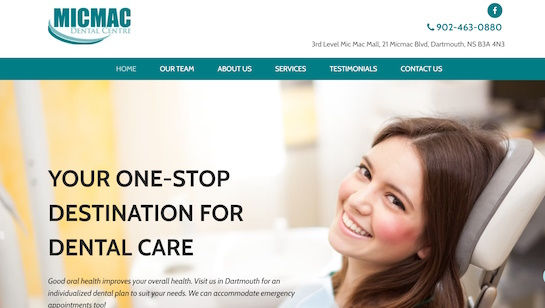
Mic Mac Dental Centre is a family dental practice in Nova Scotia. The .ca ending tells Canadian patients the clinic is local before they read a word, which matters for a search that is geographic.

Freedom Dental Care is a general and cosmetic dental practice. Shortening the domain to freedomdds.com keeps it easy to say on the phone, and dds signals a dentist without spelling out the name.
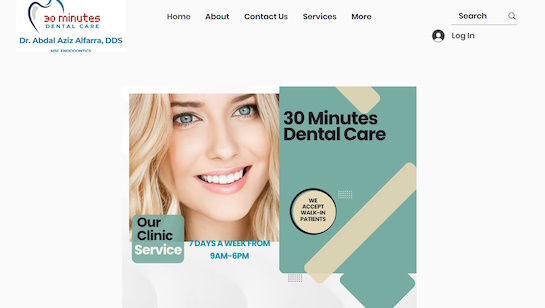
30 Minutes Dental Care is an emergency and same-day dental clinic. The domain leads with the promise rather than the practice name, and .net worked when the exact-match .com was unavailable.
Keep your dental domain, email and website together on Wix
Dental practices end up with their web presence scattered more often than most businesses. The domain sits with whoever built the first site, the hosting lives somewhere else and the front desk runs on a free consumer email account. That split becomes a real problem the day you switch marketing vendors or a renewal notice lands in an inbox nobody checks anymore.
Wix is an ICANN-accredited domain registrar. Wix is the registrar for .com and .net and works as a reseller for other extensions, so a .dental or .clinic domain is registered through a partner while you still manage it from your Wix account.
That account also covers the website builder and a business email address at your practice domain, which is what patients expect on an appointment reminder. Web hosting comes with a Wix site. Connecting a custom domain needs a paid site plan and business email is a separate subscription, so map out what you need before you buy. Domain privacy protection is available on supported extensions, so check yours if you plan to register under your own name.
Expert tip from Keren Friedlander, Product Manager at Wix:
"There are three WIN Pillars for choosing a great domain name. 1) Words: Keep it short and easy to spell, 2) Identity: Make sure it's relevant to your business and 3) Name: Ensure it's unique and distinguishable. Avoid numbers and hyphens as they can complicate the domain."
Wix lets business owners register a domain, build a website and manage hosting and email from one platform, with 24/7 support behind it so a problem never has to wait for a Monday morning of appointments.
Get the details:

Best domains for dentists FAQ
Should a dentist use .com or .dental?
A dentist should take .com whenever a clean version is available and move to .dental when it is not. The .com ending is what patients type by default, so it wins on habit alone. A short memorable name on .dental still beats a long hyphenated .com though, because patients say a dental address out loud more often than they type it.
Can I put the word orthodontist in my domain if I am a general dentist?
A general dentist should keep orthodontist out of the domain unless they are qualified to announce that specialty. Orthodontics is a recognized dental specialty, and whether you can announce one comes down to your own training and the rules in your state. General dentists can advertise the services they provide, so a domain built around braces or aligners carries the same patient intent without implying specialist status.
Should my domain be my name or my practice name?
Your practice name is the safer choice in almost every case. A personal name works while you are the only dentist and the reason patients book, but it forces a rebrand the moment you sell, retire or bring on partners. If your name already is the practice name locally, register both and point one at the other.
Who should own my dental practice domain?
The practice should be listed as the domain registrant, not the marketing agency and not the person who built the site. Registrant is the field that decides who can transfer or renew a domain, and practices that skip this usually find out during a vendor change. Ask for the registrar login and confirm the practice name appears on the registration before you sign with anyone.
Do I need a new domain if my practice changes its name?
A practice that changes its name should register the new domain and redirect the old one rather than dropping it. The old address still lives in patient bookmarks, review sites, insurance directories and printed reminder cards for years afterward. Keeping it registered and pointed at the new site costs one renewal a year and protects every one of those paths.


