Updated: 2 days ago
The perfect domain is just a click away: find your domain name→

A business domain name is the unique web address used to access a business website, such as yourbusiness.com. It can match your business name or reflect what you offer, and it becomes part of how customers find your business online. This guide explains how business domains work, how to choose one and how to register a domain for your business.
Secure your perfect domain in just a few clicks with Wix. Get everything you need in one place: business email, reliable hosting, SSL protection and full privacy. With 24/7 support and no hidden fees, getting your site live is simple and worry-free.
TL;DR: what is a business domain name
A business domain name is the address customers use to reach your business website. It’s registered for a set period and can also be used for business email, subdomains and other parts of your business. The right domain should be easy to remember, fit your brand and work well with your chosen domain extension.
You’ll learn:
What a business domain name is and how it works
The different parts of a domain name, including TLDs and subdomains
Why having your own domain matters for a business
How to choose a short, memorable and relevant domain
What to do if your preferred domain name is taken
How much business domains cost, including renewal and premium domain fees

What is a business domain name?
A business domain name is the unique address that points to your company's website. Type it into a browser and it sends the visitor to the servers where your site lives. People see a name like freshbrewcoffee.com, but behind the scenes it maps to a numeric IP address that computers use to find each other.
The word business here does not mean a separate product. A company domain name is the same technical thing as a personal one. What makes it a business domain is how you use it, as the front door for your brand, your email and everything a customer needs to find you.
You do not own a domain name outright. You register it for a set period, usually a year at a time, and you keep it as long as you keep renewing. Let the registration lapse and the name goes back on the market for anyone to claim.
Learn the basics: What is a domain name

What makes up a business domain name
Every domain name breaks into two required pieces plus one optional one. Knowing which is which makes the rest of the buying process much easier to follow.
Your name (the second-level domain)
This is the part you actually choose. In freshbrewcoffee.com, freshbrewcoffee is the second-level domain, and it is the piece that carries your branding. It has to be unique within its extension, which is why availability changes depending on the ending you pair it with.
Your domain extension
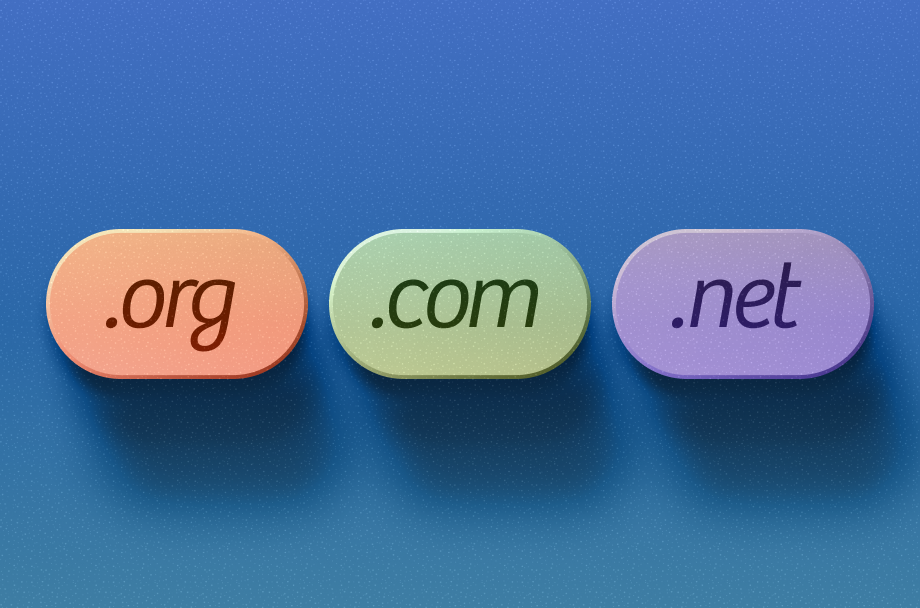
The extension, also called a top-level domain or TLD, is the ending after the dot. Some are generic and open to anyone, like .com, .net and .org. Others are tied to a country, like .co.uk or .ca, and some are built around a niche, like .studio, .design or .fitness. The extension you pick changes both the price and the impression the name gives.
Subdomains
A subdomain is an optional prefix that splits off a section of your site, like shop.freshbrewcoffee.com or blog.freshbrewcoffee.com. You create subdomains yourself once you own the domain, and they do not cost extra. Free website builders often hand you a subdomain on their own domain instead of a real one, which is the setup most business owners eventually outgrow.
Found the perfect name for your business? Lock in your domain before someone else does.

Business name vs domain name
Your business name is what you registered with your state or trade under. Your domain name is what someone types to reach your website. They are two separate things, and nothing forces them to match.
That said, matching them removes friction. When a customer hears your name in a referral and guesses the web address, you want them to land on your site rather than a search results page. A mismatch also creates small trust problems later, like a card statement that reads differently from the company the customer thought they bought from.
The two clear cases for not matching are a legal name that is too long to type and a name so generic that the domain version would be meaningless. A consultancy registered as Ramirez and Partners Professional Services Group is better off with ramirezpartners.com. In both cases you keep the legal name on paper and use a shorter trading name online.
It is also worth deciding the two together rather than in order. Plenty of founders name the business first, fall in love with it and then discover every usable domain version is gone. Checking availability while the name is still a shortlist saves that whole detour.

Why your business needs its own domain name
A business can have a website without owning a domain name, but using a free subdomain can make it harder to build a consistent business identity. Your own domain gives you a permanent address you can use across your website, email, marketing materials and social profiles. It also means you control that address for as long as you keep the registration active.
01. It makes your business look credible
Customers often see your domain before they interact with your business. A simple address like freshbrewcoffee.com looks more established than a long subdomain attached to a website builder or hosting service. It also gives you a consistent name to use on business cards, invoices, ads and social profiles.
02. It gives you a matching business email
Your domain can also be used for a business email, such as you@yourbusiness.com. This keeps your website and email under the same name and gives customers a clear way to recognize messages from your business.
03. It gives you a consistent address customers can remember
A domain that matches your business name gives customers one simple address to remember and share. You can use the same domain on your website, social profiles, printed materials and marketing campaigns, so people know where to find you even when they encounter your business in different places.
04. It helps you protect your business name
Registering a domain puts that specific web address under your control for the registration period. This prevents someone else from registering the same address and using it for another business. If your business name is important to your brand, registering the matching domain early can also help you avoid having to change your web address later.

How to choose a business domain name
Your domain needs to work beyond your website. You’ll put it on business cards, invoices, social profiles, ads and email signatures, and customers may hear it from someone else before they ever see it. Use these checks to find a name that works in all of those situations.
01. Start with your business name
If customers already know your business by name, using a matching or shortened version of it is usually the simplest choice. For example, a business called Green Leaf Landscaping could use greenleaflandscaping.com or a shorter version such as greenleaf.com.
If you're still naming your business, check domain availability at the same time. Finding out that your preferred domain is unavailable after you've already printed materials or registered the business can mean changing the name or paying more for an alternative.
02. Make it easy to say, spell and remember
Your domain should work when someone hears it in a conversation, sees it on a flyer or types it into their phone. Avoid complicated spellings, long strings of words and names that need an explanation.
Try this simple test: say the domain to someone without showing it to them and ask them to type what they heard. If they get it wrong, consider a simpler version.
03. Choose a name that can grow with your business
Don't make your domain so specific that it limits what you can offer later. A plumber who chooses johnsresidentialplumbing.com may find the name awkward if they start serving commercial clients too.
Think about where you expect the business to be in a few years. A broader domain can give you room to add services, products or locations without changing your web address.
04. Use keywords when they help customers understand your business
Adding a relevant word can make your domain easier to understand, especially when your business name doesn't explain what you offer. For example, a photographer named Olivia Bennett could use oliviabennettphotography.com.
You don't need to fill the domain with keywords. A short, distinctive business name is generally more useful than something like bestcheapplumbingservicesnearme.com, which is difficult to remember and can quickly become outdated.
Expert tip from Keren Friedlander, Product Manager at Wix:
“There are three WIN Pillars for choosing a great domain name. 1) Words: Keep it short and easy to spell, 2) Identity: Make sure it's relevant to your business and 3) Name: Ensure it's unique and distinguishable. Avoid numbers and hyphens as they can complicate the domain.”
05. Pick an extension that makes sense for your business
The extension is the part after the dot, such as .com, .org or .shop. .com is a familiar choice for many businesses, but other extensions can work well too.
Think about what your customers are likely to expect and what fits your business. A local business may consider a country-specific extension, while a business focused on a particular industry could choose a relevant niche extension.
06. Avoid numbers and hyphens when possible
Numbers and hyphens can create confusion when you're telling someone your domain out loud. If your business is called 4 Seasons Cleaning, for example, customers may not know if the domain is 4seasonscleaning.com or fourseasonscleaning.com.
If the simpler version is available, it's usually the better choice. If you do use a number or hyphen, say the domain out loud and check that customers are unlikely to mistype it.
07. Check the name before you commit
Before registering a domain, check more than its availability. Search for the business name and similar names online and check the relevant trademark database in the markets where you plan to operate.
This is particularly important if you're building a new brand around the domain. A domain being available doesn't automatically give you the right to use that name as a business or trademark.
08. Check the matching versions worth owning
Once you've found a good domain, search for obvious variations that customers might type by mistake. You may also want to register common extensions or misspellings if they're important to your brand.
For example, if your main domain is greenleaflandscaping.com, consider whether customers could reasonably type greenleaflandscape.com instead. Securing an important variation can prevent another business from using it later.

What to do when your business domain name is taken
This is the most common snag by far, and it is rarely a dead end. The .com version of a short, obvious name has probably been registered for twenty years. You have five realistic ways forward.
Shorten it. Drop a filler word. Ramirez Landscaping Company becomes ramirezlandscaping.com.
Add a small word. The words get, try, hq, co and your all work as prefixes or suffixes. tryfreshbrew.com reads fine.
Add your location. Strong for any business serving one area, since it also tells a customer you are nearby.
Change the extension. Pair the exact name you want with a different ending that still suits the business.
Buy it on the aftermarket. Some owners will sell. Expect anything from a few hundred dollars to five figures for a short, generic name.
Use a domain name generator if you need help coming up with an idea. Already have an idea? Check the availability with a domain name search tool.

Only one of those five has a real catch, and it is the extension swap.
Expert tip from James Shaffer, Managing Director at Insurance Panda:
“If the .com is taken and you're paying extra for a .biz, .info or some other odd extension, you're probably losing traffic to the 'real' owner.”
The fix is to make the alternative extension feel deliberate rather than second choice. A shop that owns freshbrew.shop and uses it everywhere reads as a brand decision. A shop that owns freshbrewcoffee.biz because the .com was gone reads as a workaround.
On the aftermarket, resist paying five figures before the business has proven itself. Big rebrands happen all the time, and an unproven company gets more out of that money almost anywhere else.
Explore more:

How much does a business domain name cost?
A business domain can cost anywhere from a few dollars to hundreds or even thousands of dollars, depending on the domain extension, the registrar and the name itself. For a standard domain, the initial registration is usually an annual fee. Some extensions cost more than others, so compare the price before choosing your domain.
The domain pricing you see when searching for a domain may not be the full cost of keeping it long term. Before registering, check:
Registration price: What you pay for the first term, usually one year.
Renewal price: What you'll pay when that term ends. A low introductory price can increase at renewal.
Privacy: Check what privacy protection options each registrar offers.
Premium domains: Short, memorable or highly desirable names may already be owned by someone else and listed for resale at a much higher price.
Additional domains: You may decide to register common variations or multiple extensions to protect your business name.

For most small businesses, you don't need to spend a large amount on a domain. A standard available domain is usually enough to get started. If the exact name you want is being sold as a premium domain, compare the cost with simpler alternatives such as shortening the name, adding a relevant word or choosing another suitable extension.
One important tip: don't compare domains based only on the first-year price. Check the renewal cost too, especially if you're choosing a domain that you plan to use for your business for years.
When you upgrade to a premium plan, you'll even get a voucher for a free domain name for your first year.

Premium and aftermarket domains
Sometimes the business domain you want is already registered. If the name is valuable, the current owner may offer it for sale as a premium or aftermarket domain. Unlike a standard registration, you’re buying the domain from its current owner, so the price can range from a few hundred dollars to tens of thousands or more.
For a business, paying more for a domain can make sense when the name is short, memorable and closely tied to the brand you plan to build. A strong domain can be easier to use in advertising, easier for customers to remember and less likely to need explaining. It can also be worth considering if the domain exactly matches an established business name and changing the name would create significant costs.

Before paying a premium price, consider:
How important is the exact name? If customers already know the business by that name, getting the matching domain may be more valuable than it would be for a new business.
Will you use it for years? A premium domain makes more sense as a long-term business asset than as a temporary address.
What are your alternatives? Compare the asking price with the cost and effort of choosing a different business or domain name.
Does the domain have a clean history? Check that it hasn't been associated with spam, scams or other activity that could create problems for your business.
Is the price justified? A short, relevant domain can be valuable, but being expensive doesn't automatically make a domain a good investment.
For most businesses, an available standard domain is perfectly suitable. A premium domain is worth considering when the name has clear business value and the price makes sense for your budget and long-term plans.
Learn more about domain brokers

How to register a business domain name with Wix
You can register your business domain directly through Wix and manage your domain, website and business email from the same account. Wix offers more than 400 domain extensions, including popular options such as .com, .net and .org, along with industry and location-specific extensions.
Here’s how to register a business domain with Wix:
01. Search for your business name
Enter your preferred domain into the domain name search to check its availability. You can also compare different extensions and their prices, which can help if your first-choice .com is already taken.
02. Try the domain name generator
If your preferred name isn't available, use domain name generator to get alternative ideas based on your business name or what your business does. This can be useful when you want a name that's relevant to your business but your first few choices are already registered.
03. Register your domain
Choose an available domain, select your registration period and complete the purchase. You can also choose private registration to keep your personal contact information out of the public WHOIS record. Wix also offers automatic renewal options to help prevent your domain from accidentally expiring.
04. Connect your domain to your website
If your website is built with Wix, you can connect your newly registered domain to it and manage the domain settings from your Wix account. Wix websites also include free SSL, which encrypts the connection between your website and its visitors.
If your website is hosted somewhere else, you can still manage your domain through Wix and connect it to your existing site. You can also transfer a domain you already own to Wix, subject to the applicable transfer requirements.
05. Set up your business email
Once you have your domain, you can add a matching business email such as you@yourbusiness.com. Using the same domain for your website and email gives customers a consistent way to identify your business and keeps your business communications separate from a personal email account.
If you're also building your website with Wix, eligible annual Premium or Studio plans include a free domain for the first year. The domain renews at its regular price after the first year.
Business domain name FAQ:
Does my domain name have to match my business name?
No. There is no legal or technical requirement for the two to match. Matching them does make you easier to find and easier to trust, so it is the default worth aiming for. Shortening a long legal name or trading online under a cleaner version of it is completely normal and nothing to worry about.
Do I need an LLC to buy a business domain name?
No. Anyone can register a domain name as an individual, and you do not need a registered company, a tax ID or a business license first. Many founders register the domain before they file anything, precisely so the name is locked down. Business filings are public record, so the gap between filing and registering is a genuine window.
Can I use my domain name as my business name?
You can, and plenty of online-first companies do exactly that. Register the business name properly with your state and check it against trademarks, the same as you would with any other name. Owning the domain gives you no rights to the name by itself.
Should I put LLC in my domain name?
Usually not. It makes the address longer, adds nothing a customer cares about and has no effect on your legal standing either way. Your legal entity name belongs on your contracts and in your website footer rather than in your web address.
How long does a business domain name last?
You register a domain for a term, most often one year, and it stays yours for as long as you keep renewing it. Terms of up to ten years are available for many extensions. If a registration expires it goes through a grace period and then returns to the open market, so turning on auto-renew is the simplest way to avoid losing it.
What is a good business domain name example?
A good one is short, says something about the business and survives being read out loud. freshbrewcoffee.com works because you can hear it once and type it correctly. bestcoffee-4u.net does not, because the hyphen, the number and the unexpected extension each create a chance for the customer to end up somewhere else.