Ready to showcase your best work? Start building your portfolio →
To make a dance portfolio, collect your strongest performance footage and photos, write a bio that covers your training and style, then bring it together in one place. A dance portfolio showcases your artistry, technical skill and growth as a performer, and whether you’re a student, choreographer or professional dancer, your online portfolio is the key to landing auditions, collaborating with other artists and building your reputation in the dance world.
Wix makes creating your online portfolio easy. Dance-ready templates and video galleries keep the focus on your movement. You’ll learn how to make a dance portfolio that highlights your individuality and versatility, from what to include to how to structure and design it for maximum impact.
With Wix’s portfolio builder, you can create a professional, eye-catching portfolio in just a few clicks. Customizable templates and intuitive tools make it easy to showcase your work with confidence, leaving a lasting impression on every visitor.
TL;DR: How to make a dance portfolio
A dance portfolio is an online collection of your performance videos, photos, bio and credits that shows casting directors and choreographers what you can do. The five steps below take you from gathering material to keeping it current.
How to make a dance portfolio | What to do |
Gather your best dance materials | Collect headshots, dance videos, resumes and performance photos. |
Write a compelling dancer bio | Summarize your dance journey, training, and artistic vision. |
Design your online portfolio | Use an elegant, motion-focused layout |
Add achievements and choreography credits | Include performances, awards, and press mentions. |
Keep it updated | Regularly refresh content with new videos, shows, and collaborations. |
How to make a dance portfolio in 5 steps

Your dance portfolio is a living expression of your art form. It tells your story visually, physically and emotionally. Follow these five steps to learn how to create a portfolio that fully represents your skills, style and artistic identity as a dancer.
01. Gather your best dance materials
Creating a dance portfolio? Your first step is to collect the materials that best showcase your talent and versatility. A strong dance portfolio typically includes the following:
Professional headshots: Clear, high-quality photos that reflect your personality and dance style. Choose neutral backgrounds and outfits that let your expression and posture come through.
Performance photos: Action shots from recitals, productions or rehearsals as these capture both the emotion and technique of your performance.
Dance videos or reels: This is the heart of your portfolio. Include short clips (1–3 minutes each) highlighting different dance styles and choreography. Film in good lighting and use clean backgrounds to focus on the movement.
Resume: List your training, companies, productions, collaborations, awards and workshops. Be specific about teachers, choreographers or programs you’ve studied under.
If you’re a choreographer, include original works with a short description of your creative process. If you’re still training, add class videos or improvisation clips that show your growth and passion through your professional portfolio.
02. Write a compelling dancer bio
Your dancer bio introduces who you are, not just as a performer, but as an artist. This section helps viewers connect to your story.
Start with your dance background: where you’ve trained, what genres you specialize in and who you’ve worked with. Then express your artistic philosophy, meaning what drives you, what themes you explore and how you interpret movement.
For example: “I’m a contemporary dancer based in New York with a background in ballet and jazz. My work explores emotion through dynamic movement, blending classical precision with modern storytelling.”
Keep it professional yet personal. Your goal is to help casting directors or collaborators see your individuality, discipline and creativity as a dancer.
03. Create and design your dance portfolio

Start by choosing a portfolio builder. You can build a site from scratch or start from a template, and the best portfolio builders include these features:
Portfolio templates, including a dance website template for you to customize
Drag and drop design tools that allow you to add videos, photos and bios easily
Mobile-friendly layouts, so your dance portfolio is readable everywhere
In-built secure web hosting, a domain name and website security
If you’d rather not start from a blank page, an AI portfolio creator can generate the layout, pages and gallery structure in one step, then hand the whole thing over for editing. Wix offers an AI website builder that generates beautiful, fully customizable sites. For a dancer that means a working portfolio to drop your reels into on day one instead of a template to wrestle with.
Include these sections:
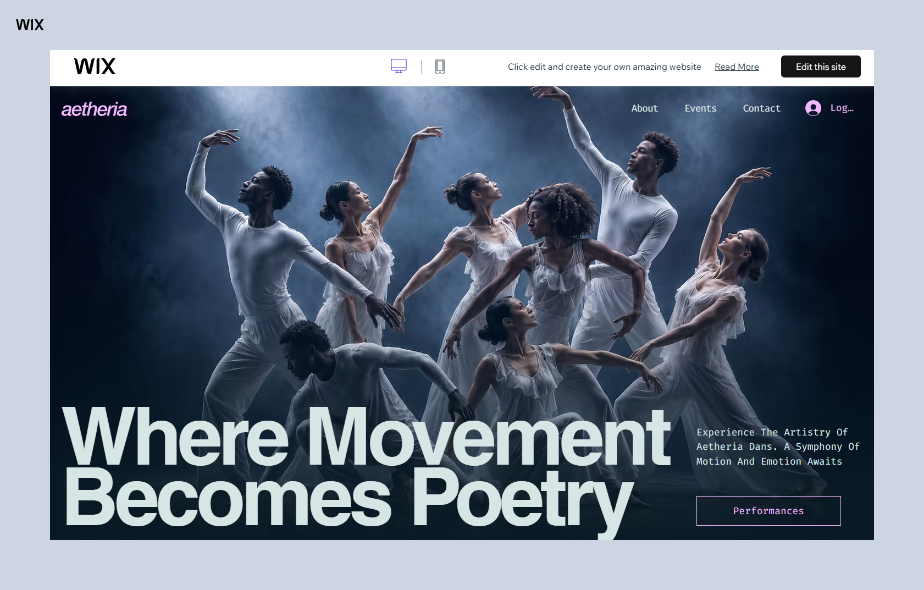
Home page: A captivating hero image or video loop showcasing your dance in motion.
About me: Your biography and artistic statement.
Gallery: High-resolution photos from rehearsals, performances or behind-the-scenes moments.
Videos: Embedded dance reels, class recordings and choreographed pieces.
Resume: A downloadable and interactive version of your professional credentials.
Contact: Easy access for inquiries, collaborations or casting opportunities.
When it comes to the design of your dance portfolio you'll want to think about which color palette to use. Because you want your portfolio to focus on your dance work and not the design, opt for minimal tones like black, white or soft pastels.
You want to avoid overly complex page layouts that could distract from your dance content.
Movement is the content, so the layout has to get out of its way.
“When a portfolio has great UX, it just clicks (literally). Smooth scrolls, motion that feels natural and a layout that tells your story without getting in the way, that’s when your work really shines.” - Sharon Hafuta, Managing Blog Editor at Wix
If you’re a dance student, consider adding a section for Training to feature schools, intensives or notable instructors. Professional dancers may prefer a Press or Performances page to list major appearances or reviews.
Be inspired by these best portfolio websites.
04. Add your dance achievements and choreography credits

Including your dance accomplishments in your portfolio help establish your credibility and growth. Include important highlights such as:
Awards, scholarships or recognitions from dance competitions.
Roles in performances, festivals or tours.
Choreographic works you’ve created or contributed to.
Collaborations with other dancers, musicians or filmmakers.
If you’ve been featured in articles, reviews or interviews, link or quote them in a dedicated “Press” section. Include a line from a review, for example a note on your storytelling or stage presence, to give your portfolio an authoritative voice.
You can also embed clips of original choreography or projects you’ve led. This showcases not only your performance ability but also your creative vision.
Finally, include testimonials or short quotes from teachers, choreographers or fellow performers. These endorsements build trust and emphasize your professionalism.
Being able to showcase your achievements is one of the most important reasons why you need a portfolio.
Learn more about how to build a dance studio website.
05. Keep your portfolio updated
Your career in dance evolves with every performance and class you take. Regularly updating your portfolio means it always reflects your current skill level and artistry.
Set a reminder to refresh your portfolio every few months with:
New performance footage or class videos.
Updated training or certifications.
Recently completed workshops, residencies or collaborations.
Upcoming shows or festivals.
If you maintain a dance blog or updates page, use it to share performance dates, reflections on training or behind-the-scenes content. This keeps your audience, and potential employers, engaged and connected to your journey.
Learn more:
Dance portfolio example (built on Wix)
Studio B Dance Company

Studio B is a dance company open to everyone, from beginners to advanced levels. They also have both recreational and competitive classes. Their goal is to foster a love for dance in all of their students.
Considering creating other types of portfolios?
How to make a dance portfolio FAQ
How long should my dance reels be?
A professional dance reel should be 1–3 minutes long. Begin with your strongest clip and include multiple styles or performances to demonstrate range. Ensure high-quality sound, lighting and framing so your movement is clear and dynamic.
Should I include group performances or only solo ones?
You can include both. Just make sure to indicate where you appear in group videos or photos. Use captions or timestamps so viewers can easily identify your role within the ensemble.


