Updated: Sep 7
The perfect domain is just a click away: claim your domain→

There’s a reason many successful sites have domains under 8 characters: short names stick. But that doesn’t mean every domain should be tiny.
When you buy a domain name, keep in mind that the right length depends on your brand, your goals and how people will actually use it. This article breaks down what you need to know before you create a website, so you can choose a domain that’s clear, memorable and built to grow with your brand.
Secure your perfect domain in just a few clicks with Wix. Get everything you need in one place—business email, reliable hosting, SSL protection and full privacy. With 24/7 support and no hidden fees, getting your site live is simple and worry-free.
TL;DR: how long should a domain name be?
Domains can technically be up to 63 characters, but most successful websites stick to 6–15 characters. Short domains are easier to remember, type and share and they perform well on mobile. Longer domains can still work if they clearly describe your brand, include keywords naturally and stay readable. The key is balancing clarity, relevance and availability, not just focusing on length.
You’ll learn:
What makes the ideal domain length for usability and brand recall
Why short domains are easier to remember, share and market
When longer domains are better for branding
How domain length impacts SEO and user experience
Tips for picking a clear, memorable and flexible domain
How to balance short and long domains for your brand

What’s the ideal length?
Average domain name length among websites is 11-13 characters and shorter domains dominate the top spots. The ideal domain length is usually 6–14 characters with 15 being the upper limit for practicality. This range is short enough to type and share easily but long enough to include meaningful words that describe your business. Choosing a domain in this range also reduces errors when visitors manually type your URL.
Learn more:
Short or long domain: which should you choose?
Short domains are usually easier to remember, share and type, which is great for marketing. They also look neater in search results, social media bios and promotional materials. But, long domains can work well too if they clearly describe what your brand or service is all about and are still easy to read.
When you’re deciding, think about clarity, relevance and availability instead of just length. A slightly longer domain that is clear and descriptive is often a better choice than a short one that’s confusing. The goal is to make your domain simple for people to remember and use.
Tip: Try using a website name generator to brainstorm ideas to include in your domain name. Also, consider these tips for future-proofing your domain or the best .com alternatives (according to other business owners).
Why short domains work best
Short domain names just work. They look neat, stick in people’s heads and give your brand a friendly professional vibe. Here's why:
Short domains are easy to remember
Short domains stick in memory. It's a fact that most of us can only remember 5–9 things at a time. A shorter domain name fits right into that sweet spot. Aiming for 5–8 characters means visitors can easily remember your site and type it in correctly which can lead to more repeat traffic.
Try to avoid numbers hyphens or creative spellings since these can trip people up. Simple and meaningful words will make your site easier to find and your brand easier to remember.
Concise domain names are simple to share
Short domains are easier to share across platforms. They fit well in social posts emails business cards and even just saying them out loud. When your domain is simple to say and type it spreads naturally through word of mouth helping new visitors find your website.
A shorter domain also looks more professional in print and online giving your brand that extra boost of credibility.
Compact domains work well on mobile
With over half of all web traffic coming from mobile devices, a short domain means fewer typos and a better experience for your visitors. They're easier to see on small screens and less of a headache for anyone typing your URL.
Did you know: one extension was built around this. A .mobi domain signals a mobile-first site, and a short name in front matters more there than anywhere else.
Brief domains make your brand more marketable
Short domains are naturally more brandable. They’re easier to pair with strong domain extensions like .com, .co.uk or .shop that instantly communicate your website’s purpose. A memorable, concise name makes marketing campaigns more effective and recognizable.
Short domain names help you stand out
When you're in a busy market, being different is everything. Generic domains packed with keywords can make you look like every other business out there.
A short, unique domain helps you build a strong brand identity and gives you the freedom to expand your business later on. Plus, a clean and memorable name looks more professional to potential customers.
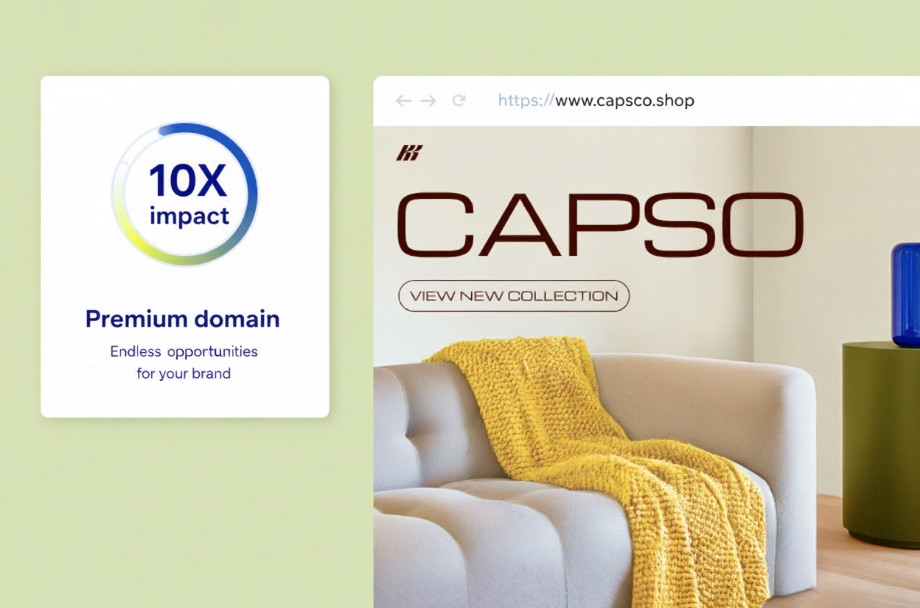
Claim a premium domain to boost your brand authority and make marketing easier from day one.

When longer domain names make sense
Maintain brand consistency with your domain
If your brand name is longer, your domain should reflect it to avoid confusing customers. Matching your website domain with your brand name and social handles helps people recognize and trust your business.
For example, a music studio called Bay Beat Studio is better off using baybeatstudio.com rather than shortening it to beatstudio.com. Dropping part of the name makes it harder for customers to connect the domain to your brand.
Use descriptive keywords in your domain
Longer domains let you include relevant keywords that describe your business. For example, londonleatherbags.co.uk clearly communicates the product and location without being too complicated. Adding keywords naturally boosts SEO while keeping your domain clear and professional.
Increase availability with longer domains
Short, catchy domains are often already taken. Adding descriptive keywords or location terms can help you find an available domain name that fits your brand. For example, instead of trying to get leatherbags.com, londonleatherbags.co.uk is clear, professional and easy to remember.
Did you know: the extension adds to the count as well. A .international domain is 14 characters after the name, which is the trade-off for a word almost nobody has taken.

Does domain length affect SEO?
Your domain length won’t directly affect your ranking. Search engines don’t reward shorter domains just because they have fewer characters. Instead domain length influences SEO indirectly through things like your click-through rate, brand recognition and how easily users can remember and revisit your site.
Years ago, having a domain that exactly matched a search term was a big deal. Now, search engines are much smarter. What really matters is offering great content, a smooth user experience, being an expert on your topic and getting strong backlinks. The words in your domain just don't have the same pull they used to.
Where domain length still matters is perception and behavior. Short clear domains tend to look more trustworthy in search results and are easier to type, which can boost engagement metrics over time. But a slightly longer domain that’s clear and brandable can perform just as well if it builds authority and delivers value.
At the end of the day, your domain should be a branding and usability decision first, SEO signal second.
Domain name length best practices
Aim for 6–14 characters: Domains in this range are quick to type, easy to remember and less prone to typos. Very short names can feel vague while longer ones increase friction, so this range tends to hit the sweet spot for recall and usability.
Prioritize clarity over being ultra short: A clear two-word name that instantly communicates your brand is usually stronger than a short but abstract word people can’t connect to anything. Recognition beats brevity.
Say it out loud: If you have to spell it out or repeat it, it’s a sign the length or structure may be working against you. Domains that sound natural in conversation are easier to share and remember.
Avoid unnecessary filler words: Words like “the,” “my” or extra descriptors add length without improving understanding. Removing them keeps the domain tighter and cleaner while still preserving meaning.
Keep mobile users in mind: A lot of your visitors will type your domain on their phones. A shorter domain is easier to type on a small keyboard and means fewer mistakes.
Check readability: When you remove the spaces between words your domain should still be easy to read. You don't want to accidentally create a new or confusing word.
Leave room to grow: A domain that’s too specific can feel restrictive later. Choosing a length that allows a broader brand name helps you expand into new services without needing a rebrand.
Balance brandability and keywords: Keywords add context but stacking too many makes the domain long and forgettable. A concise brand name with strong content can rank just as well and builds stronger recognition over time.
Keep it simple: Repeating letters can make your domain harder to type and share. A simpler name is easier for people to remember and get right.
Do the memory test: Say your domain name out loud once. If someone can’t remember it later it might be too complicated. Try simplifying it to make it stick.
Avoid stacking multiple concepts: Trying to fit too many ideas into one domain usually leads to length creep. A focused name feels stronger and is easier for people to associate with your brand.
Finding a domain name with Wix
Wix makes it straightforward to find and register the right domain, with no experience needed.
01. Use the domain name generator tool
Head to the Wix domain name generator and enter a word or phrase related to your brand. The tool will suggest available domain names based on your input, helping you find creative options you might not have considered.

02. Search for your preferred domain
Once you have some ideas, use the Wix domain name search tool to check availability. Just type the name you want and you'll instantly see whether it's available and at what price.

03. Choose your extension
Wix offers a wide range of extensions (.com, .net, .org, .co, .ai and more). For most creators and businesses, .com is still the most recognized and trusted choice. That said, niche extensions like .studio, .shop, or .ai can work well if they genuinely fit your brand.
Did you know: .onl is a domain extension with a very small zone, so short single-word names are still findable there long after they went elsewhere.
Learn more:
04. Register your domain
Select your preferred domain, choose your registration period (up to 10 years) and complete your purchase. Wix helps with the technical setup, including DNS configuration, SSL certificate and domain privacy protection, making it easier to get your domain ready for your website.
Learn more:
05. Connect it to your site
If you're building with Wix, you can connect your domain directly to your website in just a few clicks. You can also get a free domain for the first year when you sign up for any annual Wix website plan.

Short domain name examples from real Wix sites

Koketit is an illustration and branding studio whose seven-letter domain lands in the ideal length range. Koketit.com is brandable yet short enough to type quickly and remember after one visit.

Msurge is a marketing agency with a six-letter domain that shows shorter is usually stronger. Msurge.com is fast to type and easy to say, staying under the length where domains get hard to recall.

Liquis is a digital design agency whose six-letter name keeps its domain well within the ideal length. Liquis.io is short enough to type quickly and remember, yet distinctive enough to build a brand on.
Domain name length FAQ
Is a shorter domain name better?
Shorter domains are easier to remember, type and share, which can improve user experience and brand recall. That said, clarity and relevance matter more than length—sometimes a slightly longer descriptive domain fits your brand better. Focus on keeping it simple and easy to recognize.
How many characters should my domain name be?
Aim for 6–14 characters to balance memorability, usability and space for meaningful words. Staying within this range helps reduce typing errors, improves recall and keeps your domain clean and professional.
Should I include keywords in my domain name?
Adding keywords to your domain name can give users context and help them understand what you're all about. Just don't overdo it—stuffing too many keywords can make your domain name long and hard to remember. Keep your domain name readable and true to your brand and only use keywords when they fit naturally.
Do long URLs hurt SEO?
Long URLs don’t necessarily hurt SEO but they can be confusing for users and lead to more typos. Search engines prefer URLs that are clear and easy to read so it’s best to keep them short and sweet.
Should I use hyphens or numbers in my domain?
Steer clear of them. Hyphens and numbers can lead to typing mistakes, make your domain harder to remember and more difficult to share verbally. This could hurt your traffic and brand recognition.
Should I register multiple domain extensions?
Yes. Securing common extensions like .com, local country TLDs or relevant niche extensions protects your brand from competitors and makes sure visitors can find you even if they type the wrong extension.