Updated: Sep 1
The perfect domain is just a click away: claim your domain name →

If you're looking to find the perfect domain name for your new website, this guide will walk you through the pros and cons of the .co vs .com debate. Choosing from so many domain extensions is a big decision, and while the .com domain is the tried-and-true choice, .co is a shorter, modern alternative.
With a clear understanding of what each extension offers, you can make an informed choice that aligns with your brand's goals. Whether you prioritize trust and recognition or availability and a modern feel, we've got you covered.
The perfect domain is just a click away: register your .co domain→
TL;DR: .co vs .com
Here’s the main takeaway: .com is the most popular and trusted domain extension, making it a great choice for almost any business. On the other hand, .co is a newer, shorter alternative that's popular with startups and tech companies.
Let's break it down further and explore the .co vs .com debate some more.

What is a .co domain?
The .co extension is the country code top-level domain (ccTLD) for Colombia. However, it's widely used globally as an alternative to .com. Many startups and tech companies have adopted it because it's short, memorable and often available when the .com version is already taken. It’s seen as a modern and trendy choice for new businesses.
Read more:
Benefits of a .co domain
Opting for a .co domain comes with several advantages, especially for new and growing businesses.
Its primary benefit is availability. With so many .com domains already registered, finding a short and memorable name can be tough. The .co extension opens up a new pool of possibilities, making it easier to secure your desired domain name.
Additionally, .co has built a reputation as the go-to extension for innovative startups. Brands like Hinge (hinge.co) and VSCO (vsco.co) use it, giving it a cool, tech-savvy feel. This association can help position your brand as modern and forward-thinking.
"There are three WIN Pillars for choosing a great domain name. 1) Words: Keep it short and easy to spell, 2) Identity: Make sure it’s relevant to your business and 3) Name: Ensure it’s unique and distinguishable. Avoid numbers and hyphens as they can complicate the domain." - Keren Friedlander, Product Manager at Wix
Common challenges of a .co domain
Despite its benefits, the .co domain has some challenges. The main issue is user trust. As a recent study showed, .com is still the most trusted TLD by a significant margin. Since .com is so dominant, some users might accidentally type .com instead of .co when trying to find your site, leading them to a competitor or an error page.
Another potential issue is cost. In some cases, .co domains can be more expensive to register and renew than their .com counterparts. This is something to consider when you're managing your budget, especially in the early stages of your business.
Learn more: How much does a domain name cost?

What is a .com domain?
The .com domain is a top-level domain (TLD) that stands for "commercial." It was one of the first TLDs created in 1985 and has since become the most popular and recognized domain extension in the world. It’s the default choice for businesses, organizations and individuals looking to create a website.
Learn more: What is a generic top-level domain (gTLD)?
Benefits of a .com domain
The biggest benefit of a .com domain is the instant credibility and trust it provides. People are familiar with it and automatically associate it with established, professional businesses. This familiarity can lead to higher click-through rates from search results and more direct traffic.
From an SEO perspective, while Google has stated that TLDs don't directly impact rankings, user preference for .com can indirectly help. A trusted domain extension can improve user signals like click-through rate, which are important for search rankings.
Finally, .com domains are often affordable and easy to register. Their widespread use means they're supported by all registrars and hosting providers, making the setup process straightforward.
“A good domain name does more than just get you online, it makes your brand memorable and credible. When people see a clean, professional domain, they’re more likely to click and more likely to come back.” - Ofir Gvili, Domains PMM at Wix
Common challenges of a .com domain
The main challenge with .com is availability. Because it's so popular, the name you want might already be taken. This can force you to get creative with your domain name, perhaps by adding extra words or hyphens, which can make it longer and harder to remember.
If your desired .com domain is owned by someone else, you might have the option to buy it, but this can be very expensive. Domain squatters often purchase popular names with the intention of selling them for a high price, putting them out of reach for many new businesses.
You may also be interested in:
.co vs .com domain comparison
Feature | .co | .com |
Primary use | Startups, tech, creative brands | Commercial businesses of all types |
Trust factor | Lower than .com | High |
Availability | Generally high | Often limited |
Cost | Typically more expensive | Generally affordable |
SEO impact | No direct negative impact | No direct impact, but high user trust |
Examples of .co and .com domains
There are many successful companies that use both .co and .com domains, demonstrating the versatility of both of these domain extensions.
Examples of .co domains:

V-Labs is a SaaS company building AI and virtual-meeting tools for distributed teams. Its short, invented name suits a modern .co that reads tech-forward and is easier to grab than a crowded .com.

Lauren Taylor Design is a residential interior design studio in Texas. A .co keeps the studio's full name in the address, clean and professional without settling for a long or hyphenated .com.

The Mighty Spice Co. is a specialty food brand selling spice blends and seasonings online. The .co doubles as the 'Co.' in its name, so the address feels intentional, memorable and on-brand.
Examples of .com domains:

Koketit is an illustration and branding studio with a short, invented one-word name. A .com is the natural fit: the most recognized extension worldwide, it keeps a memorable brand instantly trusted.

EatKinda is a plant-based ice cream brand sold in stores and online. A .com gives this growing consumer brand the universal, trusted address shoppers expect and type by default in any market.

Izzy Wheels is an eCommerce brand selling fashion spoke guards for wheelchairs. A .com signals a credible, established online store and is the address customers worldwide instantly reach for first.
.co vs. .com - can I have both?
Yes — and from an SEO standpoint, securing both a .co and .com domain can actually strengthen your brand’s online presence. Many businesses register multiple domain extensions to protect their brand, prevent competitors from claiming similar URLs and avoid losing traffic to look-alike domains.
Learn more: domain vs URL
Typically, you’ll choose one as your primary domain (most often the .com, since it’s the most familiar to users) and set up a 301 redirect from the .co version. This ensures that anyone who types in either address lands on the correct website, preserving both traffic and authority signals.
Owning both domains also supports long-term SEO stability. If users accidentally type “.com” out of habit but you operate on “.co,” you risk losing potential visitors. By registering both, you maintain control over your branded search footprint, create a smoother user experience and help search engines consistently associate your brand with the right site.
In short: buying both a .co and .com is a smart SEO and brand-protection strategy — and redirecting the secondary domain consolidates your authority in a way that benefits both users and search engines.
You may also be interested in exploring .org vs .com vs .net.
How to get started with a .co or .com domain
Ready to get your .co or .com domain? Here's how to do it:
01. Brainstorm names
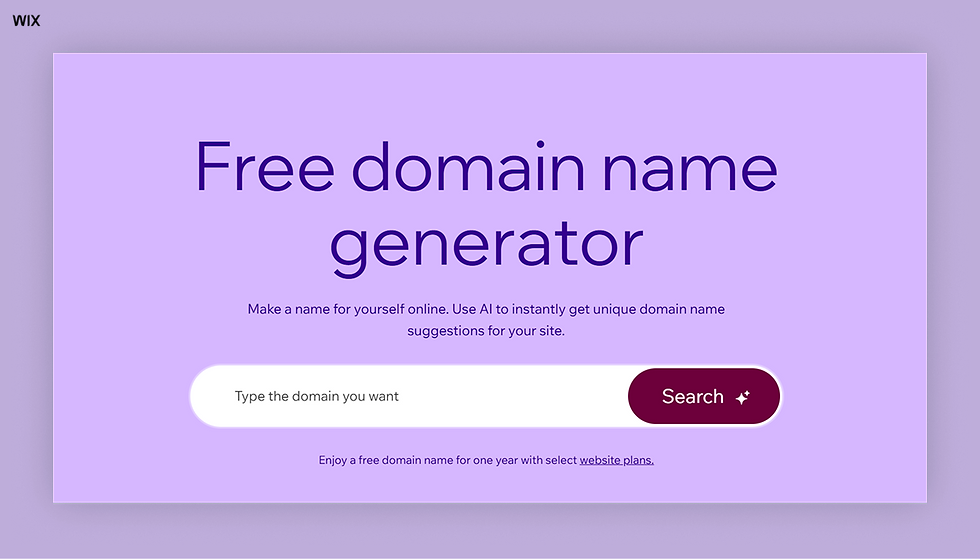
Start by coming up with several domain name ideas that reflect your brand. Aim for something short, clear and easy to spell. If possible, choose a domain name that hints at what your business does or the value it offers.
If you need further inspiration, use a domain name generator for unique domain name suggestions.
Learn more: How to choose a domain name
02. Check availability

Use a domain registrar, like Wix, to see if your desired .co or .com name is available. Wix makes it easy to find available domain extensions using the domain name search tool, and recommends relevant options to match your business.
Learn more:
03. Register your domain
After choosing the perfect name, the final step is to register it. Simply follow the registrar’s checkout process, provide your contact details and select how long you want to register your domain for (most businesses choose one to three years at a time).
Once registered, your domain is officially yours—and you can connect it to your website, professional email or future branding efforts.
Learn more: How to register a domain name
Why use Wix for your .co or .com domain
When it comes to securing a .co or .com domain, Wix makes the process simple, fast and reliable.
Wix offers a wide variety of domain extensions, so whether you’re looking for a classic .com or a newer .co, you’ll have plenty of options to choose from. Wix makes it easy to find available domain extensions with a powerful domain name search tool that checks availability in real time, helping you quickly identify the perfect fit for your brand.
As you explore your options, Wix recommends relevant domain extensions to match your business or brand, giving you ideas you may not have considered and ensuring your domain aligns perfectly with your online presence. Plus, Wix provides domain extensions for any industry or geo, so whether your business is local, global or niche-specific, you can find a domain that reflects your reach and purpose.

With Wix, registering a .co or .com domain is more than just claiming a web address—it’s about securing a professional, memorable identity online that’s tailored to your business goals.
Explore further:
Conclusion: .co vs .com - which should you choose?
If you can get the exact match of your business name as a .com, grab it. It remains the most recognizable and trusted extension on the web. However, if the .com is taken or being sold for an exorbitant price, .co is an excellent alternative. It is modern, accepted by search engines and gives you a better chance of securing a short, memorable name that fits your brand.
You may also be interested in: I want to buy a domain
.co vs .com FAQ
Does a .co domain hurt SEO?
No, using a .co domain won't directly hurt your SEO. Google has confirmed that it treats all generic TLDs equally for ranking purposes. However, user behavior, such as trust and memorability, can indirectly influence SEO and some users still trust .com more.
Is .co only for companies?
While .co is short for "company," it's not restricted to them. Anyone can register a .co domain, whether you're a freelancer, blogger or running a personal project. It’s a versatile extension that has gained popularity across different types of websites.
Are .co websites legit?
Yes, .co websites are completely legitimate. The .co domain is the country code for Colombia, but it’s widely used as a global alternative to .com, especially for businesses, startups and entrepreneurs. Many reputable companies use .co domains to create a short, memorable web address. Just like any other domain, the legitimacy of a .co website depends on the business behind it—check for trust signals like SSL certificates, professional design and clear contact information to ensure the site is credible.


