Updated: Oct 18
The perfect domain is just a click away: claim your domain→
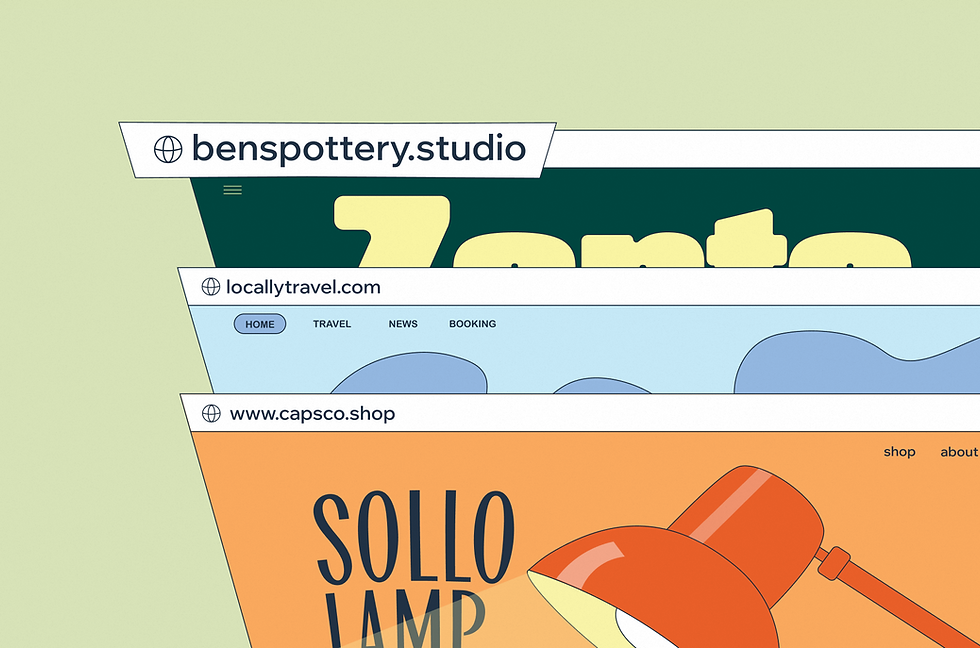
Buying a domain can feel like grabbing a great piece of internet real estate, but figuring out what it’s actually worth is a lot less obvious. Automated estimates often don’t tell the full story.
If you’re thinking about selling, negotiating or just curious about your domain name value, understanding how it all works will help you set realistic expectations and make smarter moves.
Secure your perfect domain in just a few clicks with Wix’s domain registrar. Get everything you need in one place: business email, reliable hosting, SSL protection and full privacy. With 24/7 support and no hidden fees, getting your site live is simple and worry-free.
TL;DR: how much is my domain worth?
A domain is worth what a buyer will pay, which you can estimate from its keywords, traffic, backlinks, brand strength and sales of similar names. With a price range in hand, you can decide whether to keep the domain, improve it or sell it.
You'll learn:
What a domain is and how pricing works
The biggest factors that influence domain value
How to evaluate your domain step by step
Ways to increase your domain’s worth
How to use valuations to guide your buying or selling decisions

What is a domain?
A domain is the unique name that represents a web address on the internet. It’s what people type into their browser to visit a site, like yourname.com.
Your domain reflects your brand and can shape how people see your business. If you’re building a website, pick a domain that’s relevant, easy to remember and simple to spell to help establish your brand online.
Use a domain name generator if you need help coming up with an idea. Already have an idea? Check the availability with a domain name search tool.
What is domain worth?
Domain worth is the market value of a domain name based on its potential appeal to buyers or businesses. It’s essentially how much your domain could sell for or be valued at in today’s market.
Factors like how short and memorable it is, whether it has popular keywords, the type of extension it uses and the traffic it gets all play a role. A domain that’s easy to spell and fits a business or niche well is typically more appealing and valuable than one that’s long or complicated.
A domain’s value isn’t set in stone. Market trends, demand and the domain’s history can all affect its price. You can get a good sense of what it’s worth by looking at similar sales, traffic stats and the overall quality of the domain.
But at the end of the day, a domain is worth what a buyer is willing to pay for it. That’s why it’s a good idea to check your domain’s value regularly if you’re planning to sell, buy or use it for your business.
Learn more:
How domain pricing works
A domain’s price comes down to its market demand and potential business value. Appraisal tools can give you an estimate based on length, keywords, traffic and relevance. But a real buyer might pay more or less depending on things like timing, industry trends and their specific needs.
Some domains sit idle for years even with high appraisals, while others sell fast because they meet a current demand. Understanding the difference between estimated value and market value helps you make smart decisions when buying, selling or holding onto a domain.
Domains gain value from tangible factors like traffic and backlinks and intangible ones like memorability and brand potential. Looking at both helps keep your expectations realistic.
12 domain value factors
Several factors contribute to the valuation of a domain name. It’s based on structured criteria that define its desirability and usefulness. Here are the key aspects professionals and tools evaluate when determining its worth.
01. Domain age and its impact on domain value
Domains that have been around longer generally hold more value. Search engines see older domains as more credible because they've had more time to establish authority.
For example, a domain registered 10 years ago is often seen as more reliable than one created last month. However, age alone doesn’t guarantee high value; it often needs to work alongside the other factors below.
02. Domain length and memorability
Short and simple domains are easier for people to remember and type, which makes them more valuable. A domain that sticks in a user’s mind can drive repeat visits, direct traffic and boost brand recognition.
Long or complicated domains are harder to recall, prone to typos and often feel less professional, which can limit their appeal to buyers or businesses.
Memorability ties directly to branding potential. Domains that are catchy, easy to pronounce or visually clean are more likely to be used across marketing materials, email addresses and social media.
This mix of simplicity and recallability makes a domain easier to promote and gives it a competitive edge in the marketplace.
When evaluating your domain, ask yourself: Can someone type it correctly after hearing it once? Is it short enough to fit naturally in conversation, ads or a logo? Domains that answer yes to these questions usually hold higher value and attract more interest from potential buyers.
03. Branding potential of a domain name
Brandability is how well a domain can represent a business or idea and stick in people’s minds. A highly brandable domain is unique, creative and easy to associate with a product, service or identity.
Domains that feel distinctive are easier to market, simpler to protect legally and more likely to build trust with customers.
A strong brandable domain often avoids generic words. Instead it uses memorable combinations, invented terms or clear messaging that shows what the business is about. This makes it versatile for logos, campaigns and social media, giving the business a professional look from the start.
When thinking about brandability, consider how the domain sounds, how it looks in writing and whether it could grow into a recognizable name. Domains that are flexible, memorable and market-ready usually have a higher value because they give buyers a head start in building a strong brand.
04. Keyword relevance and SEO value of a domain
Keyword relevance is about how well a domain name matches search terms people are actively using. Domains with popular or commercially valuable keywords can attract organic traffic and make it easier for businesses to rank in search engines.
This creates immediate value because buyers see a built-in advantage for marketing, SEO and audience targeting.
The more specific and in-demand the keywords, the more desirable the domain becomes. For example, a domain with a term frequently searched in a niche can reduce the effort needed to drive traffic and convert visitors. Domains with strong keyword relevance are easier to monetize and more appealing to buyers.
When evaluating keyword relevance, consider search volume, competition and commercial intent. Domains that naturally match what people are searching for, while staying easy to read and remember, tend to hold higher value and offer tangible advantages for businesses.
05. Website traffic and type-in traffic value
The amount of website traffic a domain gets shows how much interest people already have in it, making it a concrete measure of its value.
If a domain has consistent type-in traffic, meaning visitors type the URL directly into their browser, it proves the name is memorable and trusted. This kind of traffic is particularly valuable because it brings in visitors without any marketing spend.
Search engine traffic also adds to a domain's value. When a domain ranks well for specific keywords and draws in organic visitors, it saves a potential buyer the work of building an audience from scratch.
Even a small amount of traffic shows that the domain has some appeal, making it a better option for a business or for resale.
When you look at traffic, consider both the amount and the quality. A steady stream of relevant visitors is worth more than a huge number of random clicks. A domain that already attracts the right crowd saves you time, money and marketing effort, which all adds up to a higher market value.
06. Domain extensions
Domains with popular domain extensions like .com generally have higher worth due to their global recognition and trust factor. Other popular TLDs include .info, .org, .co, .net, .edu, .biz .gov and .tv. Niche extensions like .tech can hold value, but their appeal usually depends on specific industries.
While search engines treat all TLDs equally, buyer perception, branding and memorability often make the extension a key factor in domain valuation.
Learn more: What is a TLD?

07. Backlink profile and domain authority
A domain’s backlink profile shows which websites link to it and directly affects its value. High-quality backlinks from trusted relevant sites signal authority and credibility, which can boost search rankings and make the domain more appealing to buyers.
A strong link profile means the domain already has a foundation of trust, reducing the effort needed to build visibility.
Not all backlinks are created equal. Links from reputable publications, industry sites or established blogs are much more valuable than a large number of low-quality or unrelated links. Buyers often prioritize relevance, diversity and link consistency over time instead of just quantity.
When reviewing a backlink profile, look for steady growth, links from authoritative sources and no signs of spammy link building.
08. Legal, trademark and domain ownership considerations
Domains that infringe on existing trademarks or are linked to potential legal disputes are risky for buyers, which lowers demand and resale potential. Even if the domain is desirable, unresolved legal issues can prevent its use for branding, marketing or business operations.
It’s crucial to check for existing trademarks, registered business names or previous claims on similar domains before buying, selling or domain investing. Conflict-free domains are more appealing because they can be used right away without the risk of legal challenges.
Also, think about any past misuse or controversial ties. Domains associated with spam, scams or negative publicity may come with hidden risks.

09. Monetization potential
A domain’s ability to generate revenue directly impacts its value. Buyers are willing to pay more for domains that can quickly produce leads, sales or advertising income. Even without a live website, a domain that fits a profitable niche, contains high-demand keywords or has existing traffic can be monetized easily.
When evaluating monetization potential, think about how the domain could be used: a blog that earns affiliate income, a landing page for products or services or a lead-generation site for a business. Domains that naturally fit a revenue-generating model are more appealing because they make it easier to start earning.
10. Comparable domain sales and market benchmarks
Checking out what similar domains have sold for is one of the most reliable ways to estimate value.
When you compare domains by length, keywords, extension and niche, you get a clear picture of what buyers are willing to pay in today's market. This approach grounds your valuation in real-world demand instead of just automated estimates.
When looking at comparable sales, make sure to focus on recent transactions. Market trends can change fast, so older sales might not reflect current buyer behavior. This research will help you set realistic expectations whether you’re buying, selling or holding a domain.
11. Niche or industry relevance
Domains that align with a specific industry or niche can be more valuable than generic names. A domain that clearly signals its purpose immediately attracts businesses or individuals in that market. For example a domain tailored to a specific product service or audience is more marketable and easier to monetize.
You can figure out relevance by considering industry trends audience demand and potential business applications. Domains that naturally fit a niche are easier to brand market and sell giving them a competitive edge over general or unrelated names.

12. Domain reputation, history and previous usage
A domain's history and reputation can significantly impact its value. Domains previously used for spam, unethical practices or other negative purposes may carry penalties, reduced SEO authority or distrust from users.
On the other hand, a domain with a clean history signals reliability and is ready for immediate business use.
Use archive tools and domain history services to check past usage. Watch out for issues like blacklisting, spam reports or prior legal disputes.
Domain valuation checklist
Domain Factor | Why it affects domain value |
|---|---|
Age | Older domains are more credible and may rank higher in search engines |
Length & memorability | Short, easy-to-type domains stick in users’ minds and are easier to brand |
Brandability | Unique and creative names appeal more to businesses and marketers |
Keyword relevance | Domains with high-value or commercial keywords attract buyers |
Traffic | Both type-in and search engine traffic show real audience interest |
Domain extension (TLD) | Common TLDs like .com, .net or .org are more trusted and sell better |
Backlinks & history | Strong backlinks boost authority; a clean history avoids SEO penalties |
Legal & trademark status | Domains free of disputes or trademark issues are safer to use or sell |
Monetization potential | Domains that can generate revenue quickly are more desirable |
Comparable sales | Sales of similar domains provide realistic pricing benchmarks |
How to check your domain name value
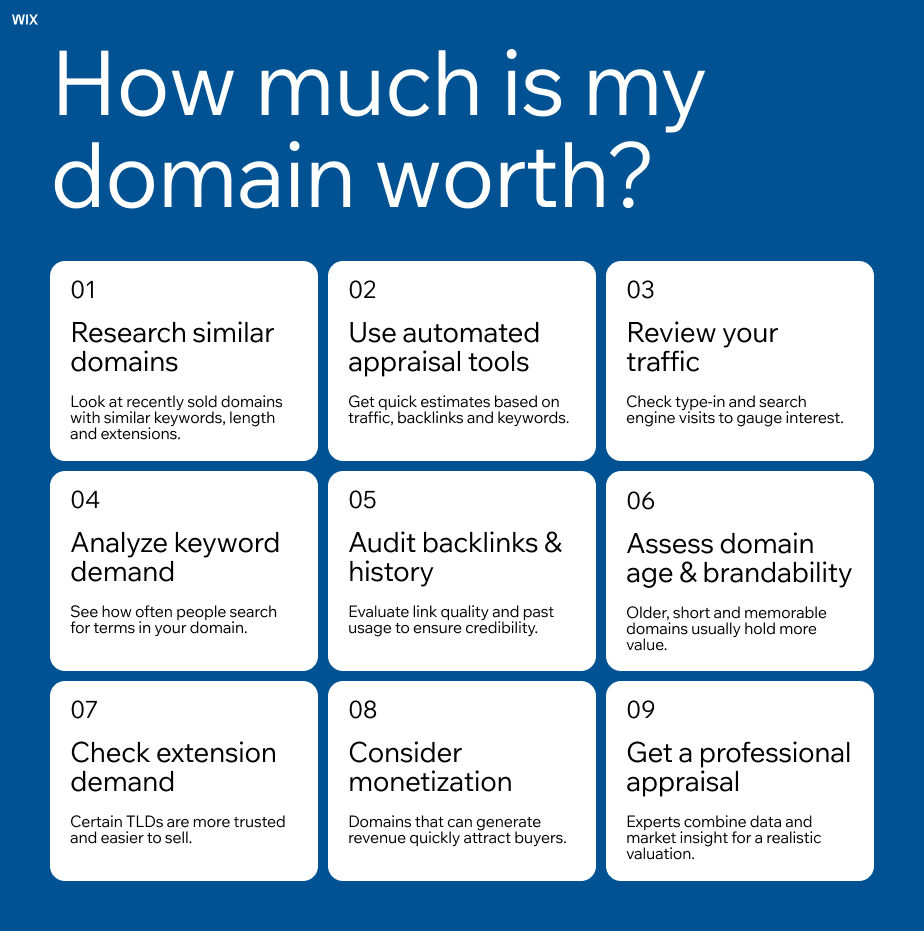
The steps below show you how to evaluate your domain from different angles so you can build a clear picture of its strengths, risks and real market potential.
01. Compare recent sales of similar domains
Start by looking at domains with a similar length, keywords, niche and extension to yours. By checking out real sale prices, you'll see what buyers are willing to pay and get a solid starting point for your own valuation.
Focus on recent sales since demand changes over time. If a few similar domains sold in the same price range, you’ll have a reliable benchmark to work with.
02. Use automated domain appraisal tools
Appraisal tools can give you a quick price estimate by looking at your domain's keywords, traffic and link data. They're handy for getting a general idea of your domain’s value and seeing its strengths and weaknesses.
Think of these numbers as a guide not a final price. Different tools can give you different estimates so it's a good idea to try a few. Look for patterns in the results instead of just going with one tool's opinion.
03. Review your domain’s traffic data
Real interest is proven by traffic. See how many visitors your domain gets where they come from and if they type your domain in directly. If your traffic is consistent it’s more valuable because you won’t have to work as hard to get an audience.
But don't just look at the numbers evaluate the quality of your traffic. Visitors that are steady and relevant are more important than quick spikes or unrelated traffic because they show real demand.
04. Analyze keyword search volume and commercial intent
If your domain includes keywords, check how often people search for them and whether they signal buying intent. High search volume paired with strong commercial intent makes a domain more attractive to businesses.
Think about how competitive the keyword space is. Domains tied to profitable niches or services tend to command higher prices because they can drive revenue faster.
05. Audit the backlink profile and domain history
Backlinks from reputable sites signal trust and authority which boosts value. Review the number and quality of links to understand how strong the domain’s reputation is in search engines.
Also, check historical usage to make sure the domain hasn’t been associated with spam, penalties or questionable activity. A clean history reduces risk for buyers.
06. Evaluate domain age, length and brandability
Aged domains can look more credible while shorter names are easier to market and resell. This combo creates a great first impression for your domain. Think about how the name sounds and looks. If it’s easy to remember and fits your brand, it’ll be a winner.
07. Assess the domain extension’s market demand
Some extensions are more trusted and widely recognized which can increase resale potential. Think about how common the extension is and how well it fits the domain’s purpose or audience. If the extension aligns with a specific industry or use case that relevance can add value even if it’s not the most common option.
08. Check monetization potential
Ask how easily the domain could generate income. Could it support ads, leads, a product or a service? Domains that fit a clear revenue model are more appealing because they offer immediate business opportunities.
Even without a live site, a domain tied to a profitable niche or strong keyword can signal future earning potential which increases demand.
09. Research niche or industry demand
Domains that align with growing industries or active markets tend to be more valuable. Look at trends, new businesses and audience interest to gauge how relevant your domain is. If the domain clearly speaks to a specific audience or sector it becomes easier to position, market and sell.
10. Consider current market trends and buyer interest
Domain value can change with new trends, tech or industries. Names related to popular topics often get more attention even if it's just for a little while.
Knowing when to sell helps you decide whether to hold onto your domain or put it on the market. If your niche is becoming more popular your domain's price might go up.
11. Get a professional domain appraisal
An expert appraisal gives a deeper perspective by blending market knowledge with technical analysis. Professionals can spot strengths, risks and opportunities that automated tools might overlook.
This is especially helpful for high-value domains or when you're getting ready to sell as it helps set a realistic asking price.
Find out more: Should you use a domain broker?
12. Estimate domain liquidity
Liquidity is how easily you can sell your domain. Some domains might be valuable but appeal to a smaller audience, making them harder to sell.
Think about how broad the potential buyer pool is and how well the domain fits common business needs. Domains with wider appeal are usually easier to sell and offer more practical value.

Why should you check your domain’s worth?
Checking the worth of your domain is like taking stock of your online portfolio. By understanding its value, you can make informed decisions about whether to hold onto it, sell it or leverage it for other opportunities.
For business owners, a valuable domain can also justify higher advertising rates or partnerships. On the flip side, if you’re planning to sell your domain, knowing its worth ensures you don’t undersell an asset that could command a much higher price.
Even if you’re holding on to your domain, understanding its value can inform your business strategy. For instance, high-value domains often require additional security layers to avoid theft or misuse.
This is also important because your domain isn’t just for your website; it’s also key to learning how to create a business email address, such as info@yourname.com or contact@yourbusiness.com.
Using your domain for email and exploring professional email name ideas adds credibility and trust to your communications, setting you apart from competitors who rely on generic email providers.
How to increase your domain’s worth
If you want to maximize your domain value, focus on strategies that enhance its relevance, strengthen its branding and attract the right audience. By investing time and effort into these areas, you can significantly increase its worth over time.
Establish quality backlinks
Search engines love domains associated with credible, high-authority websites. Building backlinks improves your site’s visibility, and by extension, its perceived value.
Improve SEO rankings
Focus on enhancing your website’s SEO. Target relevant keywords, optimize your content and improve user experience. Higher rankings attract more traffic, which can significantly increase your domain's worth.
Secure a strong reputation
Maintain a clean online presence. Ensure your domain isn’t associated with spam or shady activities and regularly monitor any external links impacting its credibility. Focus on building trust through ethical and high-quality practices, ensuring no past penalties impact your domain.
How to spot domain appraisal scams
Once you own a domain, you may receive unsolicited offers to buy it. Some are genuine, but a common scam pairs an attractive offer with a requirement to get a paid appraisal from a specific service first, and the buyer disappears once you pay.
Warning signs include pressure to act quickly, a buyer who insists on one particular appraisal or escrow service, and offers far above what similar names have sold for. Genuine buyers rarely ask you to pay for a valuation before negotiating.
To stay safe, research comparable sales yourself, use a well-known marketplace or an escrow service you choose, and never share your domain’s authorization code until payment is secured.
You’ve got your domain value. Now what?
Once you’ve assessed your domain’s worth and worked on improving it (if necessary), it’s time to put that insight to use. If your domain’s value exceeds expectations, selling might be a smart move. Alternatively, if the value aligns with your goals, continue using it as part of your long-term strategy.
For those planning to sell, connect with credible platforms and buyers to ensure a smooth transition. Whatever your plans, viewing your domain as an asset will help you make more informed decisions.
Learn how to register a domain name to get started. Find the domain owner and registration details for a website with a WHOIS domain lookup.
Learn more:
How much is my domain worth FAQ
How often should I check my domain’s worth?
It is recommended to check your domain's worth periodically, especially if you are considering selling it. Valuations can fluctuate over time due to various factors such as market trends and changes in the industry. Checking your domain's worth every 6-12 months can give you a good understanding of its value and help inform any future decisions regarding your domain.
How much does it cost to check a domain name’s value?
The cost of checking a domain name’s value can vary depending on the method you choose. Some online tools offer free estimations, while professional appraisers may charge a fee for their services. It is important to do thorough research and consider the reputation and methodology of any tool or service before investing in an estimate.
Can a domain be valuable even without traffic?
Yes. A domain can still be attractive if it’s short, memorable or contains strong keywords tied to real demand. Buyers often care more about brand potential and clarity than past visitors.
Does the domain extension affect price?
It can. Extensions like .com usually sell for more because they’re widely trusted and recognized, while newer ones like .io or .ai may carry higher value in specific tech niches.
How accurate are automated domain appraisal tools?
They’re helpful for a rough range but not a final price. Algorithms rely on data like keywords and past sales, while real buyers may pay more or less based on brand fit and timing.
How to improve a domain before selling it?
Show its potential. You can add a simple landing page, highlight possible use cases or share any traffic or revenue data to make the opportunity clearer for buyers.
Where can I see real examples of domains that recently sold?
Public sales marketplaces and domain industry reports regularly publish verified sales lists. Browsing these helps you compare similar names and set realistic expectations.
What’s the difference between a premium domain and a regular one?
A premium domain is considered highly desirable due to factors like short length, strong keywords or brand appeal and is usually priced higher from the start. Regular domains don’t have that built-in demand and are typically sold at standard registration or lower resale prices.


