SEO for higher education
Updated: Aug 13
Author: Ray Martinez

If you work in higher education enrollment marketing, you’ve probably asked yourself if SEO is important to driving enrollments for your priority online programs. As a marketer at a university, there’s a high demand for you to use limited budget and resources to drive more enrollments.
Organic marketing might be just the tool you need to hit lofty enrollment targets. With AI search, we’ve seen a rise in the lead-to-application submission rate, which rose from an average of 44% in 2024 to 56% in 2026, according to Archer data I shared at SEO Week in New York.
That lead-to-application rate indicates a rise in quality. According to a UPCEA study, roughly 50% of prospective students use AI, with 1 and 3 trusting AI tools for program research.

I’ve spent the last seven years at Archer Education driving enrollments for online undergraduate, graduate, and doctoral programs. I’ve been in higher education for over a decade, and I have firsthand experience with the shifting landscape of organic search. In this article, I’ll share the strategies and tactics we use to drive qualified prospective student inquiries that convert down-funnel and turn into enrollments.
What is higher education SEO?
Higher education SEO is a marketing strategy that optimizes a university’s or college’s website and presence on search engines and AI platforms to connect with prospective students and drive enrollment. If you don't have a website yet, here's how to make a university website.
More than just a keyword research exercise, SEO for universities focuses on building trust and demonstrating tangible ROI to compete with third-party portals. By leveraging E-E-A-T (Experience, Expertise, Authoritativeness, and Trustworthiness) signals, institutions can effectively reach high-intent learners, answer their critical questions, and convert inquiries into enrollments.

Why SEO is different for higher education
Higher education SEO is a nuanced practice because prospective students have longer buying cycles than eCommerce and SaaS. On average, it takes prospective students 4 to 18 months to apply to their desired programs, according to Archer Education data.
There’s additional nuance that can be applied to a prospective student. For example, a prospective student can fall into multiple categories, such as a first-time decision-maker, high schooler, career changer, or working adult. This means that higher ed marketers often have a diverse set of personas evaluating their program assets.
Some things to keep in mind as you develop your SEO strategy for higher education:
Online learners need to see tangible ROI from a degree program. A study of online learners found that roughly 35% of students were motivated by a stalled career. This means that online programs need to highlight more than just curriculum. They need to highlight the unique value of a program.
A massive content scope that is program- and vertical-specific. Program pages are higher education’s version of a product detail page. They drive conversion-oriented users to the site, but that‘s a small piece of the pie. Universities need to highlight student experience, faculty expertise, alum outcomes, curriculum, skill outcomes, accreditation, and cost to paint a complete picture for prospective students.
The competition isn’t just other universities. When you look at the search engine results page for “online MBA,” you might see US News, Reddit, and other online portals competing against .edu sites. Online publishers invest heavily in SEO to drive ad revenue to their sites, selling space and leads to universities.
YMYL makes E-E-A-T necessary. Your-Money-Your-Life (YMYL) queries pertain to content that impacts a user’s happiness, health, financial stability, and well-being. These queries rely on higher-quality content that focuses on experience, expertise, authority, and trustworthiness (EEAT). Universities that highlight faculty expertise, student experience, accreditation, and outcomes provide a complete picture of quality. Quality matters when targeting YMYL queries, which are often in regulated spaces. This matters even more for smaller universities or colleges that have great programs but are competing with larger university brands.
This means that in higher education search marketers need to track metrics that reflect the unique customer journey and goals. So throughout your SEO campaigns for universities and colleges, you’ll need to keep up with key metrics like:
Lead-to-enrollment rate which measures the efficiency of the entire recruitment funnel from initial lead to final enrollment.
Lead-to-application rate: A critical measure of "quality," tracking the transition of potential students from initial inquiry to application, which helps institutions manage applicant pool quality to reduce wasted effort and costs.
Cost per enrollment: A primary financial metric that focuses on driving organic traffic to ensure program viability and sustainability, distinguishing it from general lead generation metrics that may not account for the high cost-to-acquire-student ratio inherent in degree programs.
Next, let’s move into SEO strategies for higher education that reach prospective students.
An SEO playbook for higher education
Higher education marketers need strategies that drive prospective student inquiries that lead to enrollments. A sound strategy needs to drive organic traffic that reduces the overall cost per enrollment. Organic traffic creates viability and sustainability for university programs. Relying on paid conversions to drive enrollments often results in a high cost per enrollment, leading universities to lose money on each enrolled student. Below, I’ll discuss how to create strategies that support efficient marketing spend and drive quality enrollments.
Know your adult online learners first
At Archer, we start our SEO efforts with detailed audience research and discovery that uncovers key themes among prospective students that resonate with the program. We work back with faculty members and program directors to garner insights and understand who we’re marketing to.
Audience research tells you:
Who your prospective students are. Age, career stage, current education level, income constraints, family obligations, and why they’re considering a degree now.
The questions they need answered before they apply. Career outcomes, financial aid, tuition, faculty, prerequisites, etc.
Where they’re searching. Google, Bing, Reddit, TikTok, Instagram, Facebook, online portals, employer sites, etc.
From here we create user personas that reflect student profiles. How to build student profiles:
Conduct a survey to ask online students about what drove their decision-making. What content did they engage with? What was lacking? Who did they compare you to?
Talk with admissions advisors. Admissions teams are your closer. They speak directly with prospective students and have valuable insights into objections that can be addressed with content.
Analyze CRM and front-end analytics data. CRM data can provide a picture of who’s applying and where quality enrollments come from. Analytics also provides you with high-converting pages and a picture of inquiry by source/medium.
Track prompt data and build a knowledge graph. Use tools like SEMRush, Ahrefs, and Bing Webmaster Tools to track which prompts are being associated with your programs.

Build a knowledge graph through keyword research to find what adult learners search for
Traditional search engine optimization relies on keyword research to connect relevance back to your program page. With the advent of AI search, LLMs, and Google AI Mode, query fanout goes beyond keywords to drive conversational path discovery. This means longer prompts that compress the search funnel to synthesize answers targeting both informational and commercial intents.
Focus on keywords that align with your prospective student:
Program + modality: “MBA Healthcare online,” “COAMFTE-accredited MFT program,” "asynchronous rn to BSN program.”
Flexibility and logistics terms: “online MEd for working professionals,” “part-time MBA program online.”
Career outcome: “Is an MBA worth it?” “LCSW average salary.”
Additionally, you can use tools such as the ArcherEDU schema to assess entity gaps and identify opportunities to expand coverage. Focusing on longtail queries helps align program intent with unique value.
Pro tip: Mine your Google Ads conversion data. Any keyword that drives inquiry form submissions or application starts from paid search is worth investing in organically.
Build program pages that actually convert adult learners
Online program pages drive the most conversion-oriented traffic to university sites. Program pages that read more like a course catalog and don’t focus on conversion are missing an opportunity to engage prospective students further.
A strong program page includes:
Positioning that says who the program is for and the expected outcomes. “Executive Online MBA for working professionals” beats “Online MBA.”
A call-to-action above the fold. I’ve seen universities lose conversion by not leading with a form or adding a call to action that drives a prospective student to a request for information form. Pages that don’t clearly prompt users to take action will drive low conversion rates.
Modality and flexibility up front. Is the program online or hybrid? Is it an accelerated program? This information helps adult online learners self-select a program.
Total cost and financial aid. Students want to invest in themselves, but they need to know what the program costs and whether there are opportunities for financial aid.
Faculty credentials. Faculty members are a unique value proposition for institutions. Their experience and academic credentials build trust and expertise. Program pages should feature faculty members teaching in the program and link to bio pages.
Student and alums testimonials. These pieces align with the experiential aspect of E-E-A-T. Adult online learners want to hear what their peers are saying and learn more about the authentic experience.

Pro tip: Build content that links back to program pages. Higher education sites thrive on building a robust hub-and-spoke model that creates an expansive repository of information for search engines, LLMs, and prospective students to draw from.
Optimize for AI search and discovery
Adult learners are using AI to evaluate program offerings as they progress toward enrollment. A UPCEA study found that 50% of prospective students have used AI search to evaluate programs. When an adult online learner asks, “What is the best program for working professionals?” it’s imperative that your brand shows up.
What gets cited in AI responses
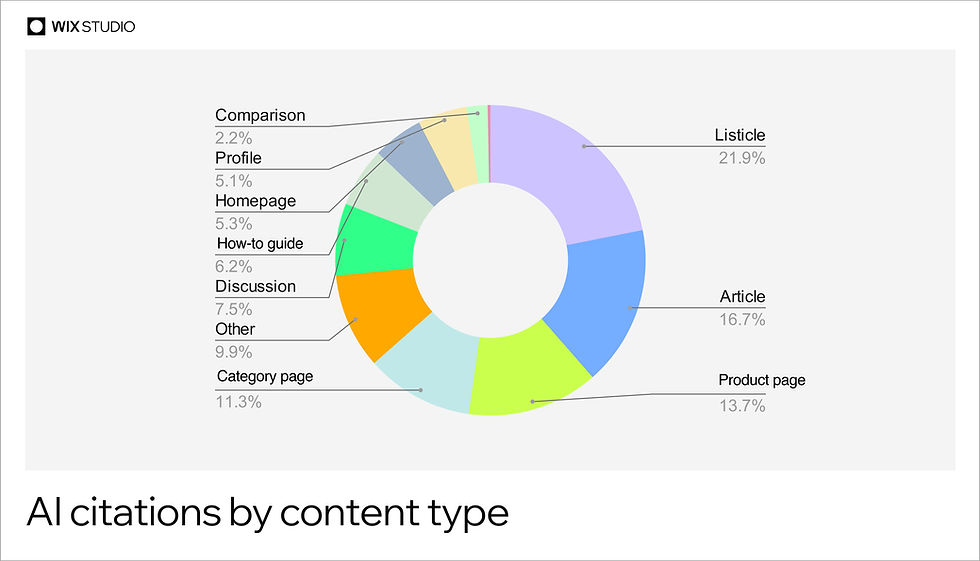
According to a Wix Studio study, articles and product pages drive a bulk of the citations in AI search. Article content was cited for more that 40% of informational prompts, and product pages received over 20% of transactional prompt citations. For higher education, this means that your program page and content strategy need to map back to the knowledge graph to cover multiple intents and earn citations.
How to position your content for AI visibility
In practice, this means:
Build content around a real online adult learner experience. Answer questions around prestige, brand affinity, and financial aid, such as “Do employers respect this degree?” or “Is their financial aid available?”
Structure content for extraction. Use descriptive headings, detailed FAQ sections, comparison tables, and structured data that AI models can reference.
Create topical authority around programs. Build a robust content strategy that supports your knowledge graph and topic silos for each program.
Pro tip: Before creating content, ask: “Would an adult learner share this with their spouse or manager to make the case for going back to school?” If yes, create it.
Track what matters: SEO KPIs for enrollment marketing
Build an organic enrollment funnel. Organic traffic to online program pages, to inquiry form submissions, to application submissions, to enrolled students.
Track AI visibility. Monitor the prompts your institution is cited for and brand sentiment within those citations.
Create program-specific reports. Build filters that let you view individual program performance to gain better insights.

Higher ed SEO is an enrollment strategy, not a marketing afterthought
Modern search rewards trust and relevance. The universities winning online enrollment through SEO are those with a deep understanding of their audiences by highlighting constraints, answering questions, and quelling skepticism by building content that connects with prospective students.