Updated: 4 days ago
The perfect domain is just a click away: find your domain →

Cool domain names are unique, memorable names that use creative wording, unexpected combinations or a distinct brand style to make a website stand out. Finding one is about more than picking something that sounds good, it’s about choosing a name that feels right for your idea and is easy for people to remember.
In this guide, you’ll find cool domain name ideas, explore different naming styles and learn how to choose a domain that matches your brand, project or website.
Secure your perfect domain in just a few clicks with Wix. Get everything you need in one place: business email, reliable hosting, SSL protection and full privacy. With 24/7 support and no hidden fees, getting your site live is simple and worry-free.
TL;DR: cool domain names
A cool domain name combines creativity with practicality. The strongest names are easy to remember, simple to share and flexible enough to grow with your idea. From choosing the right naming style to checking availability, a few smart steps can help you avoid common mistakes and find a name that works long term.
You'll learn:
What makes a domain name memorable
Different types of cool domain names with examples
Cool domain name ideas for different website types
How to test if a name is worth registering
How to choose a domain that stays relevant over time

What makes a domain name cool?
A cool domain name is easy to remember, creates a clear impression and feels distinctive without being difficult to understand. The best names usually combine simplicity with personality, giving people a reason to remember them after seeing or hearing them once.
Short names often work best because they are easier to type, say and share. A name with fewer words and characters has fewer opportunities for mistakes and is more likely to stick. Strong domains do not need to explain everything about a business. They create curiosity while leaving room for the brand to grow.
A memorable name also creates an image or feeling. A word like Drift suggests movement and simplicity, while FrostLab combines two different ideas to create something more visual. Compare that with a generic name like BestOnlineSolutions, which explains a service but feels interchangeable and harder to remember.
The final test is how the name works in real conversations. Say it out loud and ask someone to type it without seeing it. If they spell it correctly and do not need extra explanation, the name passes. If they hesitate or ask questions, the name may create friction every time someone tries to share it.

Types of cool domain names
There are a few distinct patterns that cool domain names tend to follow. Knowing them makes it easier to find one that fits what you're building.
01. Short one-word names
One-word domains look established and work across every format: URL, logo, social handle and business card. Zenith, Ember, Drift and Haven are all single words that say something without limiting where the brand can go.
The practical issue is that most short English words are already registered in .com, so you'll often need a modern extension like .io, .co or .app to land a clean one-word name.
02. Made-up brandable names
Invented words start as a blank canvas. Because the name doesn't already exist, it won't conflict with another company and it's easier to trademark. The key is to root it in something real so it still feels familiar.
Luminara borrows from "luminous," Fabriq twists "fabric" just enough to look fresh and Trovico sits somewhere between "find" and "exotic" without being either. Brandable names travel well internationally because a made-up word carries no existing meaning in any language.
Worth knowing: an invented name pairs well with a niche ending. A .moe domain gives an otherwise meaningless word an immediate context for the audience that matters.

03. Creative word combinations
Two ordinary words placed next to each other in an unexpected way can produce a name that's hard to forget. The pattern is contrast: put words from different worlds together, nature with tech, color with action, texture with place.
CloudPepper, IronPetal and FrostLab all follow it. This style works well for agencies, lifestyle brands and ecommerce stores where the name needs to carry personality. Mailchimp is a real-world example. "Mail" tells you what it does, "chimp" adds character and the combination became one of the most recognized names in its category.
04. Names with modern extensions
Over 300 million .com domains are registered, which means the clean, short .com names were taken years ago. Modern extensions like .co, .xyz, .tech, .ai and .studio give you access to names that aren't available in .com.
Wix offers over 400 domain extensions, so you can find the right fit whether you're launching a tech company, an online store or a creative project. The benefit goes beyond availability. Matching your extension to your industry also signals to visitors what kind of site they're about to visit. A .new domain goes a step further and finishes the phrase, so an address like start.new reads as an instruction rather than a label.
Did you know: some extensions set a tone on their own. A .lol domain reads as laugh out loud before a visitor opens the page, which suits comedy nights, meme accounts and joke generators.
Worth noting: some endings work as the last word of a phrase. A .best domain finishes a claim rather than labelling a sector, which is why it suits rankings, awards and shortlists.
Did you know: .golf carries the sport itself, which makes descriptive names available that would be long gone on a familiar extension.
05. Niche-specific names
A niche name tells visitors what the site is about before they click. FitPulse signals fitness without spelling it out. CodeNest signals development without a long explanation. This style works well for content sites, blogs and service businesses where it helps for Google to pick up the topic right away.
The trade-off is flexibility. A niche domain can feel limiting if your brand grows beyond the original topic, so if you might expand later, keep the keyword broad rather than hyper-specific.
Worth noting: a niche extension can do the positioning for you. A .energy domain signals the sector before anyone reads the name, which is useful when the name itself is abstract.
Found the perfect name for your business? Lock in your domain before someone else does.
Cool domain name ideas by website type
The type of site you're building should shape how you approach the name. A name that works for a tech company would feel off on a personal portfolio, and a name that suits a lifestyle brand wouldn't fit a professional services firm. Here are ideas by site type.
01. Personal brands and portfolios
Your name, or a variation of it, is always a practical option for a personal brand. Beyond that, one-word names that suggest creativity or momentum work well: Meridian, Cadence, Prism, Beacon. You can also build around your specialty: LensVault for photography, DesignFold for design, SoundBloom for music. The goal is a name that gives people a sense of what you do without locking you into one skill or project.
Expert tip from Ofir Gvili, Domains Product Marketing Manager at Wix:
Think of your domain as the headline of your brand. It's often the very first thing people see, even before they land on your website. A strong domain builds trust instantly and sets the tone for your entire website.
02. Startups and tech companies
Tech names tend to be short, invented or extension-forward. PixelForge, ClearStack, BrightLoop and CoreStack each give you a sense of what the company does without limiting what it might become.
Invented names like Trovico, Kova and Zentara are worth considering if you're planning to grow quickly. They're easy to trademark, easy to translate and easy to say in any market. Pair them with .io, .ai or .co for a name that reads as current and credible.
03. Creative and lifestyle brands
Creative brands work well with names that have some sensory or visual quality to them. AmberLoop, QuietSpark and WildThread each create an impression before you've clicked anything.
Playful names also work when the brand has a relaxed personality: WaffleLab, BumbleBrew, NoodleNode. The name should match the energy of what you're selling. A minimal design studio doesn't need a chaotic name. An indie snack company might benefit from one.
Did you know: a three-letter extension can name the material. A .ink domain covers tattoo work, illustration and print alike, which is why creative studios pick it over a neutral ending.
04. Ecommerce and product stores
For a store, the name should make it clear what you're selling or who it's for. Niche-forward names like StyleRack, ShopFront and QuickCart signal commerce without being generic. Modern extensions work well here. A .store or .shop extension tells visitors what to expect before they click.
If your product has a clear character, handmade, sustainable or premium, let that shape the name. EcoLayer signals sustainability. CraftEdge signals handmade quality. A name that fits the product looks intentional.

How to tell if a domain name is actually good
Having a name you like is not the same as having a name that works. These four tests will help you tell the difference before you register anything.
The out-loud test: say the name to a colleague without showing them the screen, then ask them to type it back. If they get it right without asking for clarification, the name passes. If they hesitate, add an extra letter or ask you to repeat it, the name has a practical problem that no amount of branding will fix.
The logo test: picture the name as a website header, a profile handle or text on a business card. Does it fit cleanly? Does it look like something an actual brand would use? Names that are too long, too stylized or rely on unusual spelling are hard to build a visual identity around.
The word-of-mouth test: imagine saying your URL at a meeting, on a call or in a voicemail. If you'd have to spell it out, say "that's with a K" or explain the punctuation, the name creates friction every time someone tries to pass it on. Hyphens and numbers almost always fail this test.
The trademark check: a domain being available to register doesn't mean the name is legally clear. Check trademark databases in your country and search the name online before you commit. Using a name that's already trademarked can create legal problems later even if the domain was technically available to buy.

Tips for choosing a cool domain name that lasts
A name that sounds cutting-edge now can feel dated in a few years. These tips focus on practicality as much as style.
Expert tip from Keren Friedlander, Product Manager at Wix:
There are three WIN Pillars for choosing a great domain name. 1) Words: Keep it short and easy to spell, 2) Identity: Make sure it's relevant to your business and 3) Name: Ensure it's unique and distinguishable. Avoid numbers and hyphens as they can complicate the domain.
Keep it short: Aim for a domain name under 15 characters. Shorter names are easier to type, remember and use across different places like business cards, social profiles and branded content. Many well-known brands use short names because they are easier for people to recall and share.
Avoid hyphens and numbers: Hyphens and numbers can create confusion when people hear or type your domain. They are harder to communicate verbally and can make your brand feel less polished. If the .com version is unavailable, try a different word combination or a relevant domain extension instead.
Consider other domain extensions: A great name with an alternative extension is often better than a weaker .com name. Extensions like .io, .co, .ai and .xyz are widely used by modern brands. Choose one that fits your industry when possible, such as .ai or .io for technology companies, .co for startups and .store for ecommerce businesses.
Check social media availability: Before registering your domain, check if the same name is available on key social platforms. Using a consistent name across your website and social profiles makes your brand easier to recognize. If the handle is taken, try a variation before committing to the domain.
Use a domain name generator if you need help coming up with an idea. Already have one? Check availability with a domain name search tool.

How to find and register a cool domain name with Wix
Finding a name and registering it are two separate steps. Here's how to handle both using Wix.
01. Search for available names.
Wix provides instant domain name search so you can find the right name and lock it in fast. Enter your idea and Wix shows you whether it's available across .com and hundreds of extensions in real time.
02. Use the AI domain name generator if you're stuck.
Wix has an AI-powered domain name generator that turns your business idea into a list of available, brandable names in seconds. Enter a few words about your brand and it produces options you can check and register immediately.
03. Browse 400+ domain extensions.
If your first choice isn't available in .com, explore the full range Wix offers. From .ai and .io to .design and .studio, there are over 400 options to find a combination that works for your brand and your industry.

04. Register in one place.
Wix is an ICANN-accredited domain registrar, which means you can search, register and manage your domain in one place. Your domain comes with SSL protection and 24/7 support, and you can add privacy protection. You can also connect it to Wix's website builder to build and launch your site from the same dashboard.
05. Build your website.
Once your domain is registered, connect it to a Wix website and start building. Your domain and website live in the same dashboard, which makes updates, renewals and settings easier to manage from day one.
Learn more: How to get a free domain name
Cool domain name examples from real Wix sites

Koketit is an illustration and branding studio, and its short invented name makes an effortlessly cool domain. Koketit.com is punchy, easy to say and impossible to confuse with any other brand.

EatKinda is a plant-based ice cream brand whose playful two-word name reads as one cool, modern domain. EatKinda.com is short, memorable and hints at the brand's fun personality.
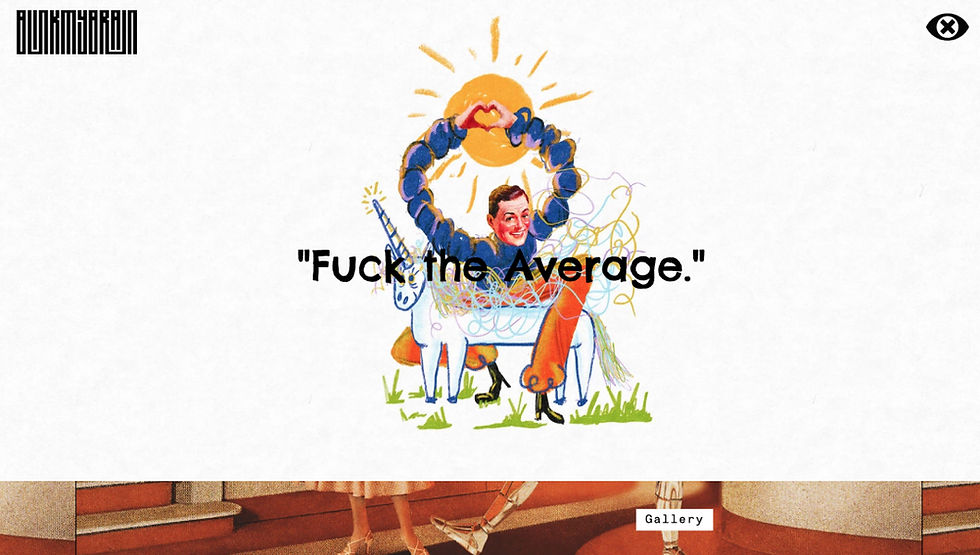
Blink My Brain is an animation studio using the offbeat .wtf extension for a cool, unexpected domain. The quirky name and extension make blinkmybrain.wtf memorable and full of character.
Cool domain names FAQ:
How do I come up with a cool domain name?
Start by writing down words that describe your brand: what it does, what it feels like and who it's for. Then try combining two of those words in unexpected ways, or use one as a root for an invented word. Say each option out loud to test how it sounds. A domain name generator can also help by producing options based on your keywords that you can search and register right away.
What makes a domain name memorable?
Memorable domain names are short (under 15 characters), easy to spell after hearing once and have a distinct character. Names that use contrast, like pairing a soft word with a sharp one, or that borrow from a familiar word and add a fresh twist tend to stick. The out-loud test is the most reliable quick check: if someone can repeat and spell it without seeing it written, the name will travel.
Is .com still the best extension for a cool domain name?
.com is still the most recognized extension, but it's not the only credible option. Extensions like .io, .co, .ai and .xyz are widely trusted and often give you access to cleaner, shorter names that aren't available in .com. The best approach is to aim for a great name first and then find the best available extension for it, rather than settling for a mediocre .com when a better name exists in another extension.
How long should a domain name be?
Aim for under 15 characters, and ideally between 6 and 12. Shorter names are easier to type, harder to misspell and look cleaner in headers, business cards and social profiles. Every extra character adds friction, and that compounds across every visitor, share and referral.
Can I use made-up words as a domain name?
Yes. Some of the most successful brand names online are invented words. Because the word doesn't already exist, there's no conflict with other businesses and trademarking it is more straightforward. The key is to root it in something familiar so it still feels natural, something that sounds like a real word even if it isn't. Names like that are easy to say and remember without needing an explanation.


