Why 2026 will be the best year for small businesses in search
Author: Eli Schwartz

Small businesses have been at a disadvantage in search for most of the internet’s history. You could have the best product or service in the world, but you’d still be competing with the sheer marketing heft of big brands. A local shoe store could offer better quality and a nicer customer experience than Foot Locker and still end up buried ten pages deep in Google results.
That’s about to change.
Over the next year, we’ll witness one of the biggest shifts in search since the invention of Google itself. Thanks to AI, search results are becoming more diverse, more personalized, and more context-aware than ever before.
For small businesses, this isn’t a threat. It’s the biggest opportunity in decades. As the author of Product-Led SEO and a growth advisor who consults with some of the internet's largest companies to drive billions in revenue, I’ve seen how algorithmic changes have traditionally favored scale. But with AI search rewarding depth, authenticity, and expertise, small businesses are uniquely positioned to win. Here’s how.

First, SEO isn’t dead
Let’s clear something up right away: SEO isn’t dead. It won’t die until humans stop searching, and that’s not happening anytime soon. What’s changing is how people search, and how search engines interpret their intent.
AI-driven search features, like Google's AI Mode or ChatGPT’s Search, are no longer just matching keywords to pages. They’re using massive context models to understand meaning, intent, and nuance.
That means they can generate different results for each individual, based on everything from their location to their search history to the specific phrasing of their question. This is the personalization revolution in search today.
Search is no longer about guessing what “everyone” is typing. It’s about matching exactly what your customers are asking for, and being the most credible, useful, and trustworthy source for that intent.
That’s a huge shift in power. It levels the playing field between small and large companies in a way we’ve never seen before.
How small businesses can win in this new landscape
As the definition of “search” expands to include SERP results, AI answers, smart devices, voice queries, and AR glasses, the principles of SEO are evolving, too. But the fundamentals haven’t changed: you still need to understand your customers, meet their needs, and provide clear, credible information.
Here’s how to do that in the age of AI-driven search.
01. Think like your user, not like a search engine
Most small business owners overthink SEO. They start by researching what user-first keywords they should rank for instead of asking, “who am I actually trying to reach?”
In the AI era, that mindset doesn’t work. You can’t game the algorithm anymore because there is no single algorithm. There are millions of individual search journeys happening in real time, and your job is to align with the right ones.
Start every content or website decision by pretending you’re the customer. What would you type—or ask—if you were searching for what you offer? What questions would you have before making a purchase?
For example, a local plumber doesn’t need to rank for “how to fix a leaky faucet.” That query is for people trying to DIY the problem. The real opportunity is showing up for “emergency plumber near me” or “can I get a plumber to my apartment today?” Those are commercial-intent searches, and the ones that lead to sales.
If your content speaks directly to that customer, you’re already ahead.

02. Strip away the extras
Over the years, SEO has become cluttered with unnecessary advice: long blog posts no one reads, “about us” pages that say nothing, keyword lists that add no value.
In 2026, the businesses that win will be the ones that simplify. That means removing every word, page, or element that doesn’t serve a clear user need.
If your business is a service provider, your homepage should immediately explain what you do, where you operate, and how to contact you. If you sell products, your pages should focus on clear descriptions, transparent pricing, and trustworthy details. Odds are you don’t need that content roadmap that addresses a bunch of things that ChatGPT, or any other AI model, is going to answer anyway. Don’t create content for a hypothetical algorithm. Create it for the human on the other side of the screen. Less is truly more here.
03. Build from your customer out, not from competitors in
It’s tempting to copy your competitors’ SEO strategies. You see what they’re ranking for and think, Maybe I should make that same landing page.
Don’t. That’s backwards thinking.
Your competitors’ audience isn’t your audience. The only way to win in AI-powered search is to build your strategy around your actual customers—their questions, their pain points, their language.
Ask yourself:
What makes my business meaningfully different?
What do my best customers already love about working with me?
What’s missing from my competitors’ content that I could provide better?
Answer those questions, and you’ll create content that no AI model can ignore. For example, let’s say you’re making a website for a retail store. It’s tempting to just Google all the retail stores in your space and try to mimic their website structure, but I want you to stop and ask:
What do I personally want on a retail store page? What are the products I want to see on the homepage? Do I need a search box or do I need categories?
This is no longer about the best practices required for SEO, but the best practices required for selling your product or services on the internet.
04. Design everything around outcomes
Ranking doesn’t pay the bills…bookings do.
Traffic doesn’t equal revenue…conversion does.
In 2026, the smartest small businesses will design every page, form, and button around outcomes. Whether that outcome is scheduling a consultation, buying a product, or signing up for a service, your entire user journey should lead there.
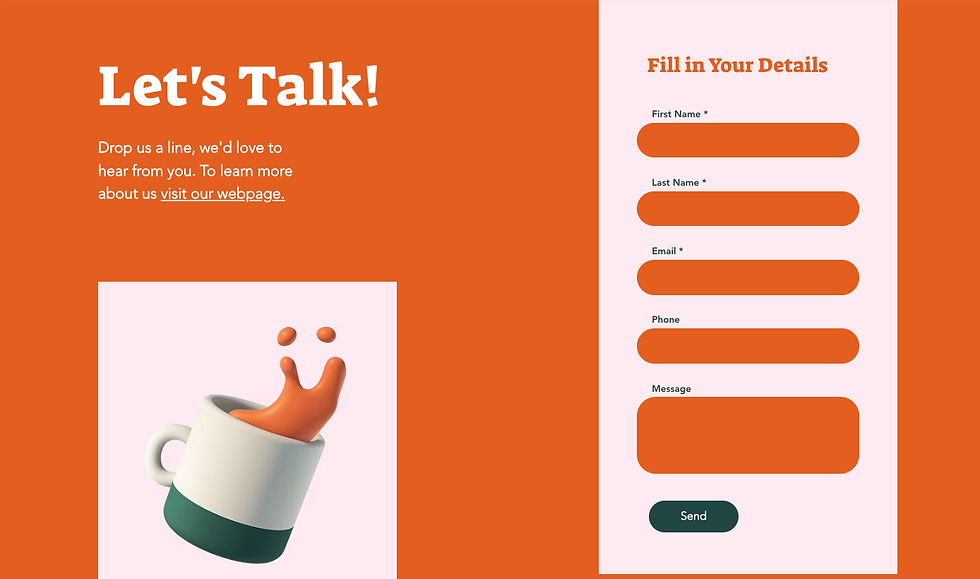
For example: If you’re a small business service provider and you want people to call you, make sure your entire website is structured so that it leads to a phone number or contact form with a clear call to action.
If your analytics show that 90% of visitors land on your homepage, make it crystal clear what they should do next. Think of your site not as an SEO machine, but as a digital storefront. AI-driven search will get people to your door, but it’s still your job to invite them in.
05. Measure what actually matters
Here’s a truth most SEO dashboards don’t tell you: traffic drops aren’t always bad. As AI starts answering more questions directly in search results, you may see fewer total clicks, but higher-quality visitors. If your conversions, calls, or orders are steady (or growing), that’s not a problem; that’s progress.
The goal isn’t to chase vanity metrics. The goal is to reach the right audience—the ones ready to take action.
For example: If a Wix user runs a website for a pediatric practice, the recent changes in search (with people getting certain answers from AI) will likely mean that their traffic has gone down. But even if traffic is down 50%, the number of children who need to go to the doctor has not changed. Now, the question is, is your website optimized to help them book an appointment with you?
A good rule of thumb: if a drop in traffic doesn’t impact your bottom line, it’s not a drop that matters.

Good SEO delivers for “AI optimization”
These days, everyone is talking about AEO (AI engine optimization) or GEO (generative engine optimization). Here’s my take: these aren’t new disciplines. They’re just the latest iteration of SEO under a different name.
When mobile search exploded, some people started saying “mobile SEO.” But in reality, it was still about delivering a better user experience. This is no different. AI search rewards clarity, freshness, and credibility. It favors sites that are well-organized, easy to understand, and regularly updated.
Instead of chasing the latest acronym, focus on timeless principles:
Keep your content current and accurate
Structure your pages with clear headings and lists
Make your expertise obvious
Update your site regularly with new products, testimonials, or FAQs that impact your bottom line
That’s not AI optimization—it’s just good digital hygiene.
The future of search might be more fair
For years, SEO felt like an arms race: whoever had the most money for backlinks, content, and technical tweaks usually won. AI is changing that. For the first time, search engines can deliver individualized results without losing quality—and that makes relevance more powerful than budget.
A small yoga studio, a local jewelry maker, or a niche newsletter can now appear in more results than ever before, precisely because they match someone’s intent better than a big brand ever could. With AI, everyone has a personal shopping assistant who can offer more targeted results.
That’s the beauty of what’s coming in 2026. Search is becoming more human again. It’s no longer about who shouts the loudest. It’s about who answers best.

Eli Schwartz is the bestselling author of Product-Led SEO: The Why Behind Building Your Organic Growth Strategy. A growth advisor and consultant, his ability to demystify and craft organic marketing strategies has generated billions in value for some of the internet's top sites.